Engineered for Israeli healthcare institutions, health maintenance organizations (Kupat Holim), and specialized surgical centers requiring strict infection prevention and fluid barrier control.
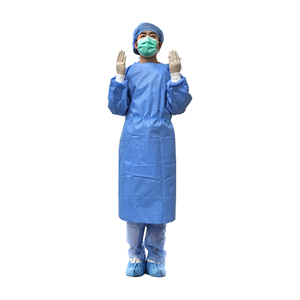
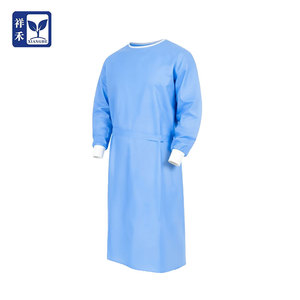
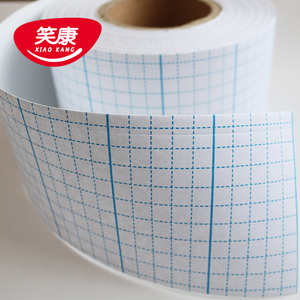
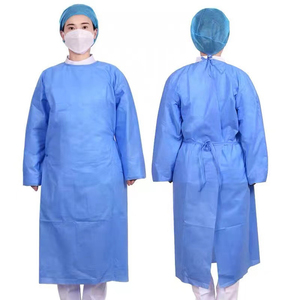
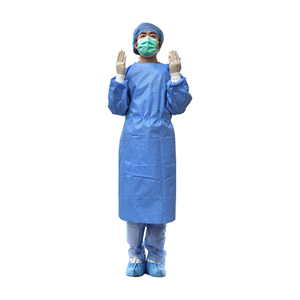

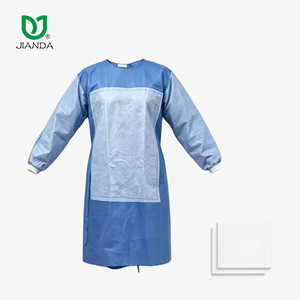
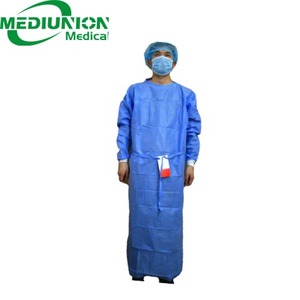
Israel's healthcare infrastructure stands among the most technologically advanced and rigorous in the Middle East and globally. Governed by strict oversight from the Israel Ministry of Health (MoH / AMAR - Medical Devices Division) and driven by the universal coverage framework of the four primary Health Maintenance Organizations (Kupat Holim Clalit, Maccabi, Leumit, and Meuhedet), medical device procurement requires uncompromising standards of safety, micro-environmental fluid management, and verified bio-compatibility.
As acute care centers, tertiary academic medical centers (such as Sheba Medical Center at Tel Hashomer, Hadassah University Medical Center, and Rambam Health Care Campus), and ambulatory surgical suites scale their perioperative efficiency, the demand for high-performance semi-permeable transparent film dressings and integrated surgical barrier apparel has reached an all-time high. Transparent dressings play a pivotal role in Central Venous Catheter (CVC) maintenance, Peripheral Inserted Central Catheter (PICC) stabilization, surgical site incision protection, and post-operative wound monitoring without disruptive dressing changes.
SEO & Clinical Information Gain Insight: Unlike standard adhesive tapes or low-MVTR film barriers, medical-grade semi-permeable polyurethane transparent dressings engineered for the Israeli climate balance two conflicting demands: maintaining a complete viral/bacterial seal (preventing Catheter-Related Bloodstream Infections - CRBSI) while offering high Moisture Vapor Transmission Rates (MVTR > 3,000 g/m²/24h) to avoid skin maceration under high ambient humidity and elevated patient body temperatures.
Supplying transparent film dressings and sterile operating room barrier gowns to Israeli medical distributors and hospital networks requires a granular understanding of localized clinical protocols and regional environmental dynamics:
From the humid coastal plain of Tel Aviv to the arid desert conditions of Negev and Eilat, adhesive transparent dressings must maintain high initial tack and long-term breathability without premature edge-lifting caused by sweat accumulation.
Israeli emergency departments and field medical logistics demand transparent film dressings with rapid-application frame delivery systems, high tensile tear resistance, and secure catheter anchorage under high-concurrency trauma care.
The Israeli Ministry of Health heavily leverages European regulatory frameworks. Technical dossiers backed by ISO 13485:2016 and CE certification under EU MDR 2017/745 drastically streamline local registration for medical importers.
A true "Information Gain" analysis evaluates the exact material science underlying transparent dressings and surgical barrier apparel. High-quality transparent film dressings rely on a tri-laminate or bi-laminate semi-permeable membrane structure designed for optimal physiological fluid dynamics:
1. Polyurethane (PU) Film Membrane: The core of transparent dressings is a ultra-thin (18 to 28 microns) medical-grade polyurethane film. This layer acts as a physical barrier impervious to liquid water, blood, bacteria (including Staphylococcus aureus and Pseudomonas aeruginosa), and viruses, while remaining permeable to oxygen and water vapor.
2. Pressure-Sensitive Acrylic Adhesive Matrix: Formulated specifically for sensitive or compromised skin, the solvent-free acrylic adhesive is pattern-coated or micro-porous. This ensures firm adhesion (preventing CVC migration) while guaranteeing low-pain, atraumatic removal that preserves epidermal integrity—a key metric monitored by hospital infection control committees in Israel.
3. Integrated CHG / Hydrocolloid Formulations: Advanced variants incorporate Chlorhexidine Gluconate (CHG) antiseptic gel pads directly into the transparent window, providing continuous antimicrobial action at the vascular insertion site for up to 7 days.
Below is a technical comparison evaluating standard medical films against Surgeine’s medical-grade high-MVTR transparent barrier dressings and AAMI Level 4 protective apparel supplied to global export markets including Israel:
| Technical Parameter | Standard Medical Film | Surgeine High-MVTR Transparent Dressing | Clinical Benefit in OR & ICU |
|---|---|---|---|
| MVTR (Upright Cup) | 800 - 1,200 g/m²/24h | 3,200 - 4,500 g/m²/24h | Prevents moisture pooling; reduces bacterial colonization risk. |
| Bacterial / Viral Filtration Efficiency | 95.0% - 98.0% | > 99.99% (ASTM F1671 / EN 13795) | Complete barrier against blood-borne pathogens. |
| Adhesive Peel Force (Tackiness) | 1.2 - 1.8 N/25mm | 2.5 - 3.2 N/25mm (Atraumatic) | Secures vascular lines firmly without skin stripping upon removal. |
| Sterility Assurance Level (SAL) | 10⁻³ | 10⁻⁶ (EO Sterilized / Gamma Validated) | Maximum compliance with hospital infection control standards. |
| Biocompatibility (ISO 10993) | Basic Cytotoxicity Tested | Fully Certified (Cytotoxicity, Sensitization, Irritation) | Safe for prolonged contact (>7 days) on delicate skin. |
To deliver true operational value to hospital procurement managers and medical device importers in Jerusalem, Haifa, Tel Aviv, and Beersheba, our product lines are customized for four primary clinical scenarios:
In Intensive Care Units across Israeli hospitals, central line-associated bloodstream infections (CLABSI) are heavily audited. Transparent film dressings allow continuous visual inspection of the insertion site without disturbing the sterile seal, maintaining catheter stability under continuous patient movement.
Following orthopedic, cardiovascular, or obstetric surgeries (such as C-sections), transparent dressings provide a waterproof barrier allowing patients to shower early in their post-op recovery phase without compromising incision sterility.
Specialized transparent film matrices applied over partial-thickness burns or donor sites retain essential physiological moisture while allowing exudate monitoring, significantly accelerating re-epithelialization in specialized burn units.
Surgeine Healthcare has dedicated over two decades to perfecting perioperative single-use consumables and infection prevention solutions. Operating four state-of-the-art manufacturing units (including a specialized facility for customized procedure packs commissioned in 2023), our manufacturing capability spans over 2,000 SKUs exported to more than 25 countries.
Core Manufacturing Capabilities:
Direct answers regarding Ministry of Health (AMAR) compliance, custom OEM branding, tender document support, and supply chain logistics for Israel.
We provide full technical dossier support for Israeli Ministry of Health (AMAR) registration. This includes valid ISO 13485:2016 certificates, EU MDR 2017/745 Declarations of Conformity, EO sterilization validation reports (ISO 11135), biocompatibility test reports (ISO 10993), and shelf-life accelerated aging data. Our regulatory team works directly with local Israeli importers to ensure swift market clearance.
Our transparent dressings feature high Moisture Vapor Transmission Rate (MVTR) polyurethane films (>3,200 g/m²/24h) coupled with breathability-enhancing acrylic adhesive coating patterns. This prevents sweat buildup and premature adhesive breakdown under high ambient temperatures in regions like the Negev, Eilat, or humid coastal areas like Tel Aviv, maintaining secure adhesion for up to 7 days.
Yes. We offer complete OEM and private-label manufacturing programs for medical distributors and group purchasing organizations (GPOs) in Israel. Packaging artwork, primary pouch printing, carton labels, and Instructions for Use (IFU) can be customized with bilingual Hebrew/English typography, barcoding, and local importer registration details.
Our gowns and drapes strictly comply with AAMI PB70 barrier classifications (Levels 2, 3, and 4) as well as European standard EN 13795. For high-fluid surgical procedures in trauma units or orthopedic surgery, our Level 4 reinforced gowns feature liquid-tight ultrasonic welded seams resistant to synthetic blood penetration under hydrohead pressure exceeding 50 kPa.
Standard SKUs maintain flexible batch sizes suitable for initial trial shipments or hospital tenders. Lead times for custom procedure packs or private-label shipments typically range between 3 to 4 weeks post-artwork approval, with sea freight directly arriving at Haifa or Ashdod ports, or expedited air freight to Ben Gurion Airport (TLV).
Yes. We supply sterile evaluation kits of transparent dressings, AAMI Level 4 gowns, and CHG skin prep products directly to hospital infection control departments, chief surgeons, and procurement committees in Israel for clinical validation prior to formal tender submissions.
Equip your medical distribution network or healthcare facility in Israel with ISO 13485 & EU MDR certified sterile solutions. Request technical specifications, AMAR dossier assistance, or factory-direct pricing today.
Send an Inquiry