
Engineered for maximum fluid resistance, microbial deterrence, and thermal comfort in Middle Eastern clinical environments.
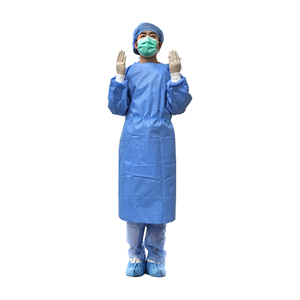
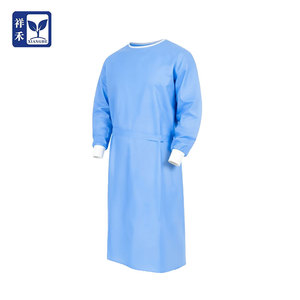
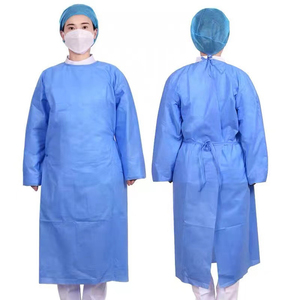
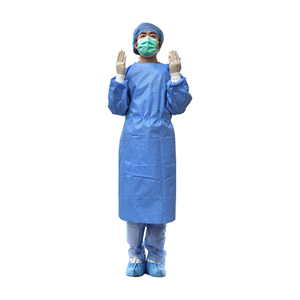

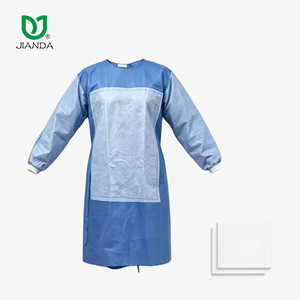
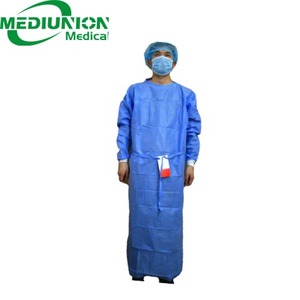
The healthcare sector across the United Arab Emirates (UAE)—anchored by the regulatory directives of the Ministry of Health and Prevention (MOHAP), the Dubai Health Authority (DHA), and the Department of Health (DoH) Abu Dhabi—has experienced a structural transition toward rigorous infection control protocols. As healthcare facilities scale to support world-class surgical centers, specialized medical tourism, and complex acute-care procedures, the demand for high-performance single-use apparel—specifically medical aprons, surgical gowns, and isolation garments—has reached unprecedented levels.
Procurement directors and clinical infection control committees in premier UAE medical institutions (such as Cleveland Clinic Abu Dhabi, Dubai Healthcare City networks, and Sheikh Shakhbout Medical City) no longer view medical aprons as mere commodity items. Instead, they evaluate exporters based on strict Information Gain metrics, proven barrier metrics (AAMI PB70 and EN 13795), continuous compliance with EU MDR 2017/745 regulations, and supply chain resilience to withstand regional logistics demands.
UAE medical importers require complete regulatory dossiers. Products must hold verified ISO 13485:2016 certifications, EC Declarations of Conformity under EU MDR, and comprehensive biocompatibility testing (ISO 10993) to satisfy stringent MOHAP medical device registration standards.
Operating theatre microclimates in the Gulf region demand a delicate balance between absolute fluid impermeability and high moisture-vapour transmission rates (MVTR). Advanced SMMS and breathable PE film laminates prevent heat stress among surgical personnel during extended procedures.
Following global supply interruptions, UAE health authorities mandate robust buffer inventories. Top tier exporters maintain strategic warehousing partners near Jebel Ali Port (DP World) and Abu Dhabi Khalifa Port to guarantee 48-hour emergency dispatch capabilities.
Selecting the correct protection tier mitigates cross-contamination while optimizing hospital procurement expenditure.
| Barrier Level | Hydrostatic Pressure (AATCC 127) | Impact Penetration (AATCC 42) | Pathogen / Blood Barrier (ASTM F1671) | Primary Clinical Application in UAE Hospitals |
|---|---|---|---|---|
| AAMI Level 1 | ≥ 20 cm H2O | ≤ 4.5 g | Not Required | Basic clinical care, visitor protection, routine patient handling in OPD. |
| AAMI Level 2 | ≥ 50 cm H2O | ≤ 1.0 g | Not Required | Phlebotomy, minimally invasive diagnostic procedures, ICU routine visits. |
| AAMI Level 3 | ≥ 90 cm H2O | ≤ 1.0 g | Not Required | General laparoscopic surgery, endoscopy, trauma emergency room triage. |
| AAMI Level 4 | ≥ 140 cm H2O | ≤ 1.0 g (Passes Phi-X174) | Passes (Impervious) | Orthopedic arthroplasty, cardiovascular surgery, high-fluid burn unit care. |
*Note: Technical compliance must be verified via independent third-party laboratory reports (e.g., Nelson Labs or SGS) under ISO 17025 accreditation.
Tailored barrier apparel designed to address specific operational challenges in regional hospital networks.
In facilities like Sheikh Khalifa Medical City (Abu Dhabi), surgical cases involve substantial fluid irrigation and prolonged exposure.
Application Solution: AAMI Level 4 Reinforced Sterile Gowns featuring ultrasonic sealed seams and dual-layer PE/SMS sleeve reinforcements ensure complete fluid barrier integrity, guarding surgical teams against bloodborne pathogens under high pressure.
Dubai’s extensive network of cosmetic, dental, and outpatient surgical centers in Healthcare City requires rapid turnover and cost efficiency without compromising sterility.
Application Solution: Lightweight 35–45gsm SMS disposable aprons and gowns with adjustable Velcro collars allow fast donning/doffing, high breathability, and reliable AAMI Level 2/3 fluid barrier compliance.
Hospital CSSD teams in the Northern Emirates (Sharjah, Ras Al Khaimah) manage continuous chemical processing and manual washing of reusable instruments.
Application Solution: Heavy-duty PP+PE coated liquid-proof aprons offer resistance to aggressive disinfectant sprays, enzymatic detergents, and splashing, protecting healthcare workers' attire.
Combining vertically integrated cleanroom manufacturing with stringent global regulatory certifications.
All surgical aprons, gowns, and procedure packs are produced in validated Class 100,000 (ISO Class 8) and Class 10,000 (ISO Class 7) cleanrooms, guaranteeing minimal particle counts and ultra-low bioburden levels prior to sterilization.
Every production lot undergoes rigorous internal quality checks: hydrostatic head pressure testing, synthetic blood penetration resistance (ASTM F1671), grab tensile strength, and linting propensity evaluation against EN 13795 metrics.
We provide complete OEM/ODM solutions tailored for Gulf Group Purchasing Organizations (GPOs). Options include custom drape/apron dimensions, specialized folding sequences for aseptic donning, Arabic/English bilingual packaging, and private brand labeling.
Driven by zero-tolerance policies for Healthcare-Associated Infections (HAIs), major hospital groups across Dubai and Abu Dhabi are replacing traditional woven cotton aprons with validated single-use SMMS non-woven apparel that offers consistent barrier performance every time.
Aligning with the UAE’s Sustainability Agenda (Year of Sustainability initiatives), procurement teams prioritize factories utilizing down-gauged, ultra-high strength non-woven fabrics that reduce plastic mass per gown without compromising AAMI PB70 barrier integrity.
Hospitals increasingly contract exporters to supply specialty-specific procedure trays containing pre-matched drapes, aprons, gowns, and equipment covers. This standardizes setup times in operating rooms and minimizes packaging waste.
We provide full technical master files including ISO 13485:2016 certificates, CE Certificates under EU MDR 2017/745, EC Declarations of Conformity, EO Sterilization Validation reports (ISO 11135), Biocompatibility test data (ISO 10993), and real-time shelf-life stability studies required for seamless MOHAP and DHA import licensing.
Standard sea freight transit time from our manufacturing hubs to Jebel Ali / Khalifa Port is approximately 7 to 12 days. For urgent tender supply or emergency stockpiling, air freight dispatch to Dubai International (DXB) or Abu Dhabi (AUH) can be arranged within 48 to 72 hours of order confirmation.
Yes. We offer turnkey OEM and private label packaging services for GCC medical distributors. This includes customized inner pouch artwork, bilingual English/Arabic instructions for use (IFU), specialized carton dimensions, and specific gown fold orientations matching hospital theatre preferences.
Our non-woven fabrics are treated with specialized anti-static and hydrophobic coatings. Furthermore, individual items are sealed in medical-grade paper-poly peel pouches or heavy-duty foil pouches with moisture desiccants to preserve sterile barrier properties throughout shipping and warehouse storage in Middle Eastern climates.