
High-barrier reinforced gowns, fluid-repellent surgical drapes, and specialized sterile protective apparel manufactured for surgical environments across West Africa.
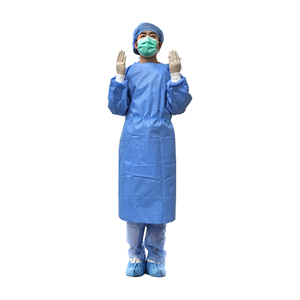
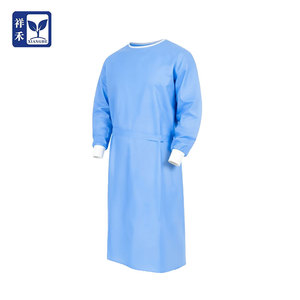
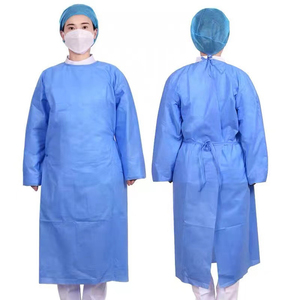
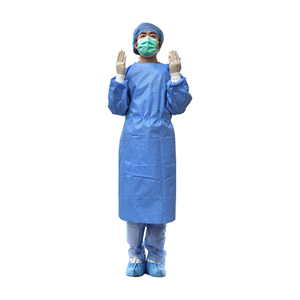

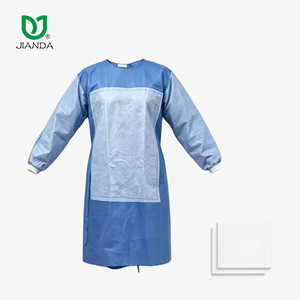
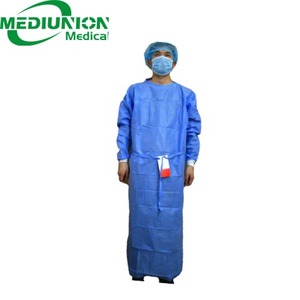
Modern surgical practice demands absolute sterility assurance inside the operating room. In Sub-Saharan Africa, and specifically across Nigeria’s expanding health ecosystem, controlling Surgical Site Infections (SSIs) is a central quality imperative for healthcare directors, infection control committees, and surgical procurement authorities. As a primary manufacturer of sterile surgical drapes, AAMI Level 2–4 gowns, and customized procedure packs, we deliver scientific-grade liquid barrier technology tailored to the environmental, clinical, and logistical challenges of the Nigerian market.
The operational environment of healthcare facilities in major Nigerian urban centres—such as Lagos, Abuja, Ibadan, Port Harcourt, and Kano—demands surgical drapes engineered for resilience. Clinical applications in federal medical centres (FMCs), state teaching hospitals, and private surgical institutes present distinct requirements:
Obstetric procedures (C-sections), trauma surgery, and orthopedic arthroplasty in high-volume Nigerian hospitals involve heavy fluid exposure. Our SMMS drapes feature specialized fluid collection pouches and high hydrostatic head resistance (>50 cm H₂O) to prevent fluid strike-through.
Operating rooms in tropical climates often experience fluctuating temperature and humidity controls. Our proprietary multi-layer non-woven SMS materials balance high liquid barrier performance with high moisture vapor transmission rates (MVTR), mitigating heat stress for surgical teams during lengthy procedures.
Given extended logistics supply lines and customs clearance procedures at ports such as Apapa and Tin Can Island, our products utilize medical-grade Tyvek and sterile barrier foil pouch packaging (ISO 11607 compliant) guaranteeing a verified 5-year sterile shelf life.
Selecting the appropriate sterile drape or gown requires clear alignment with global standards. Below is the barrier classification matrix utilized by healthcare procurement officers to match surgical risk profiles with drape specifications:
| AAMI PB70 Level | Hydrostatic Pressure (AATCC 127) | Impact Penetration (AATCC 42) | Typical Clinical Application in Nigeria | Recommended Drape / Gown Type |
|---|---|---|---|---|
| Level 1 | ≥ 20 cm H₂O | ≤ 4.5 g | Minor outpatient clinic procedures, basic care | Standard PP non-woven basic isolation gowns |
| Level 2 | ≥ 50 cm H₂O | ≤ 1.0 g | Diagnostic procedures, minor suturing, ophthalmic surgery | Lightweight SMS 35gsm surgical gowns and drapes |
| Level 3 | ≥ 50 cm H₂O | ≤ 1.0 g | General surgery, laparotomy, ENT, pediatric surgery | Heavy-duty SMMS 45gsm fluid-resistant drapes & gowns |
| Level 4 | ≥ 140 cm H₂O (ASTM F1671 Viral) | 0 g Synthetic Blood (ASTM F1670) | Trauma, C-section, orthopedic joint replacement, cardiac | Ultrasonically sealed reinforced SMMS / PE-laminated drapes |
The Nigerian medical device market is undergoing a structural transition driven by infrastructure modernizations, expanding private health networks, and stringent infection control guidelines established by the Ministry of Health and NAFDAC (National Agency for Food and Drug Administration and Control). Understanding these dynamics allows hospital administrators and healthcare importers to make data-driven supply chain decisions.
Historically, many public hospitals in Nigeria relied on traditional woven cotton surgical drapes and gowns. However, scientific evidence highlights significant limitations of laundered cotton: multi-wash degradation causes fiber breakdown, increased linting (a key vector for foreign-body granulomas and post-operative surgical site contamination), and loss of liquid barrier capability. Modern Nigerian tertiary facilities are rapidly standardizing on single-use SMS/SMMS sterile drapes due to their consistent hydrophobic protection, zero linting properties, and elimination of hospital laundry energy costs.
Operating theatre throughput is a major metric for surgical efficiency. Leading private hospital chains (such as Reddington Hospital, Evercare Hospital Lagos, and Lagoon Hospitals) as well as public teaching hospitals are adopting custom surgical procedure trays and packs. By consolidating all necessary sterile components—drapes, gowns, mayo stand covers, utility drapes, and skin prep applicators—into a single EO-sterilized pack, OR setup times are reduced by up to 40%, significantly increasing surgical turnover rates and decreasing packaging waste.
Importers and medical distributors operating in Nigeria must navigate rigorous regulatory validation. NAFDAC requires comprehensive technical dossiers, including Certificate of Free Sale (CFS), ISO 13485:2016 accreditation, ISO 11135 Ethylene Oxide Sterilization validation, and biocompatibility testing according to ISO 10993. As an established global exporter, our full product documentation suite provides seamless support for Nigerian partners executing local product registrations.
Our production facilities operate Class 100,000 (ISO Class 8) and Class 10,000 cleanrooms dedicated to surgical drape conversion, ultrasonic sealing, and automated packaging. By integrating in-house hotmelt lamination, ultrasonic seam bonding, and analytical barrier testing, we ensure that every sterile drape kit shipped to West Africa meets exact technical tolerances.

Surgeine Healthcare has dedicated over two decades to perfecting the design and industrial production of surgical disposables. Operating four specialized manufacturing units—including a state-of-the-art procedure pack unit commissioned in 2023—our corporate architecture is built around total quality control and total barrier integrity.
In-house medical film lamination and hotmelt adhesive technology established since 2017 allow precise control over fabric softness, fluid impermeability, and tensile resistance across all drape zones.
Our product families hold active CE certification under the rigorous European Medical Device Regulation (EU MDR 2017/745), providing audited proof of safety, clinical evaluation, and risk management compliance.
Every lot manufactured undergoes rigorous bioburden, EO residual, and physical barrier testing. Samples from every production run are retained for full regulatory traceability throughout their shelf life.
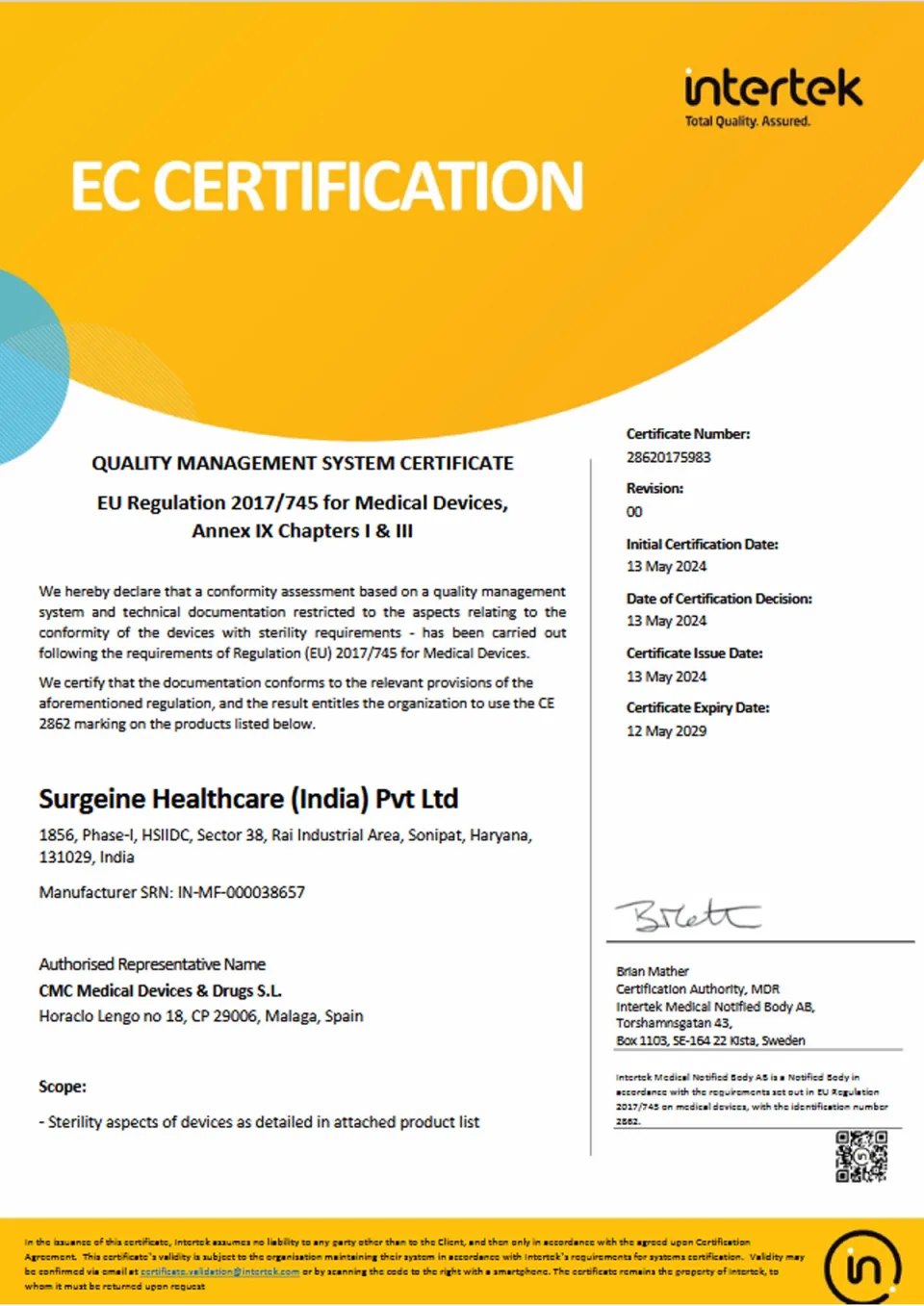
To support distributor partners in securing public healthcare tenders and achieving NAFDAC product registration, we provide complete, transparent regulatory documentation packages:
Find answers to common questions regarding purchasing, local compliance, regulatory documentation, and technical customization for sterile surgical drapes exported to Nigeria.
We provide full technical support for NAFDAC registration. Our regulatory team prepares an exhaustive dossier package including ISO 13485:2016 certificates, CE Certificates under EU MDR 2017/745, Certificate of Free Sale (CFS), ISO 11135 sterilization validation summaries, ISO 10993 biocompatibility reports, and artwork adapted with local distributor details and storage environment instructions.
For standard surgical cases in tropical climates, we recommend 35–45 GSM SMMS (Spunbond-Meltblown-Meltblown-Spunbond) fabric. The double-meltblown inner layers create a high micro-porous barrier against bacteria and fluids, while the outer spunbond layers provide physical tear resistance. For high-fluid procedures such as Caesarean sections or orthopedics, we supply PE-laminated reinforced zones or integrated fluid collection pouches with drain ports.
Yes. Our dedicated procedure pack facility allows complete customization. Hospital procurement teams and distributors can select exact drape dimensions, incision aperture shapes, incise film types (including iodine-impregnated films), sleeve styles for gowns (raglan vs. set-in), folding sequence, mayo stand cover sizes, and ancillary components such as hand towels, bowls, or prep sponges.
Standard manufacturing and EO sterilization lead times range between 20 to 30 days depending on order volume and custom pack specifications. Sea freight transit time from our export facilities to Nigerian sea ports typically ranges from 25 to 35 days. We also offer expedited air freight options for urgent hospital tender fulfillment.
Our products utilize medical-grade peelable pouches (Tyvek or medical paper coupled with multi-layer PET/PE film) sealed under strict pressure and thermal parameters. Master cartons are constructed from high-bursting-strength double-wall corrugated board, moisture-sealed with shrink wrapping to ensure packaging stability and seal integrity in high relative humidity environments (>85% RH).
Yes. We operate extensive OEM and private-label programs for established medical distributors and hospital networks throughout Africa. This includes customized inner pouch printing, custom carton design, barcoding (GS1 compliant), and customized Instructions for Use (IFU).