
High-barrier non-woven gowns, reinforced surgical drapes, and specialized perioperative disposables engineered for maximum infection control and compliance with Egyptian Drug Authority (EDA) guidelines.
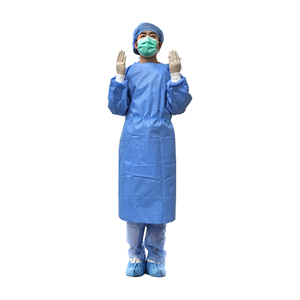
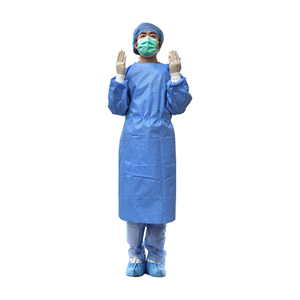

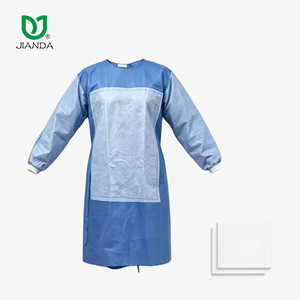
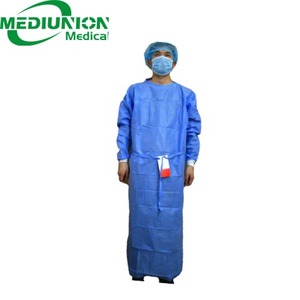
The Arab Republic of Egypt is currently undergoing a systemic modernization of its healthcare infrastructure. Fueled by the national rollout of the Universal Health Insurance System (Tameen El-Sehi El-Shamel) and centralized procurement under the Egyptian Unified Procurement Authority (UPA / El-Mowahad), clinical facilities across Cairo, Alexandria, Upper Egypt, and the Canal Zone are aggressively updating their infection control protocols.
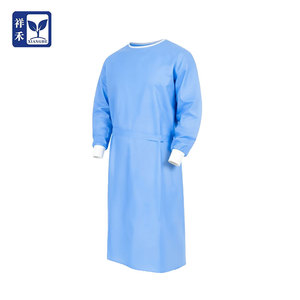
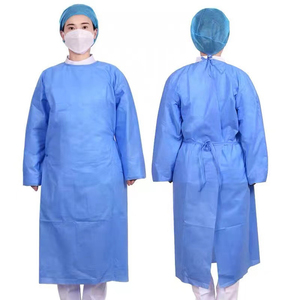
Historically, Egyptian operating rooms relied heavily on reusable woven cotton drapes. However, recent clinical studies published by regional infection control committees highlight that reusable linens suffer from micro-tear degradation after repeated autoclave cycles, leading to strike-through contamination and elevated rates of Surgical Site Infections (SSIs). Today, both public MoHP hospitals and private healthcare networks—such as Alameda Healthcare and Cleopatra Hospitals Group—are establishing mandatory mandates for high-barrier, single-use sterile drape sets and AAMI PB70 compliant surgical gowns.
For medical device importers, tenders contractors, and private hospital procurement directors in Egypt, sourcing directly from audited, vertically integrated manufacturing facilities is vital. Overseas factories must not only provide cost-efficient, high-volume production capabilities but must also furnish exhaustive technical dossiers required for registration with the Egyptian Drug Authority (EDA).
A sterile surgical drape set is not merely a piece of fabric; it is a critical perioperative micro-barrier engineered to prevent microbial migration between non-sterile and sterile zones. Our dedicated cleanroom manufacturing facility utilizes advanced multi-layer non-woven polymer matrices designed specifically to withstand harsh surgical conditions, high fluid volumes, and the ambient temperature-humidity dynamics typical of North African healthcare settings.
Our sterile drapes and gowns leverage multi-layer Spunbond-Meltblown fabric structures:
To assist Egyptian procurement managers in choosing the exact barrier rating required for specific surgical specialties, the following matrix outlines international performance parameters met by our export production lines:
| AAMI PB70 Level | Hydrostatic Pressure (AATCC 127) | Impact Penetration (AATCC 42) | Recommended Egyptian Clinical Application | Material Composition |
|---|---|---|---|---|
| Level 1 | ≥ 20 cm H2O | ≤ 4.5 g | Basic clinical examination, minor ward procedures, visitor apparel | Lightweight PP / Spunbond 25-35 GSM |
| Level 2 | ≥ 50 cm H2O | ≤ 1.0 g | Ophthalmic surgery, ENT procedures, minor excision biopsies | SMS Non-woven 35-40 GSM |
| Level 3 | ≥ 50 cm H2O | ≤ 1.0 g | General abdominal laparotomy, endoscopic procedures, urology | SMMS / Heavy SMS 40-50 GSM |
| Level 4 | ≥ 140 cm H2O (Viral Resistance ASTM F1671) | 0.0 g (Passes Phi-X174 Bacteriophage Test) | C-Section, Orthopaedic Arthroplasty, Cardiac bypass, Trauma surgery | Reinforced PE Laminate / SMMS 55+ GSM |
Operating rooms in Egypt present unique clinical challenges ranging from high patient turnover in municipal hospitals to specialized surgical requirements in private university hospitals. Factory-tailored drape sets directly solve operational friction across four key Egyptian surgical scenarios:
Egypt exhibits one of the highest rates of Caesarean section procedures globally. In busy maternity centers across Giza, Tanta, and Asyut, drape sets must manage massive fluid runoff. Our specialized C-Section Drape Sets feature integral 360-degree fluid collection pouches with drainage ports, heavy-duty incise film, and integrated cord clamps to maintain a dry, sterile surgical field and prevent fluid soak-through to surgical staff.
Total knee and hip arthroplasties conducted in elite Cairo medical centers demand maximum sterility over long procedure durations. Our Orthopaedic Drape Sets incorporate high-elasticity latex-free fenestrated apertures that form an airtight, impervious seal around the patient's limb, paired with integrated cable holders and transparent camera control covers.
Tenders issued by the Egyptian Unified Procurement Authority mandate cost efficiency without compromising compliance. Our Universal Sterile Drape Packs provide pre-configured, standardized component lists—including Mayo stand covers, instrument table covers, utility drapes with adhesive strips, and hand towels—enabling rapid room turnaround and zero component wastage.
Successfully placing foreign-manufactured sterile drape sets into the Egyptian supply chain requires a deep understanding of local statutory requirements and commercial mechanics:
Medical disposables entering Egypt are classified under Class I or Class IIa medical devices based on risk. Foreign factories must support Egyptian importers with comprehensive technical files, including:
In accordance with Central Bank of Egypt (CBE) regulations, international suppliers must be capable of processing transactions via Letters of Credit (L/C) or Documents against Payment (D/P). Logistics routes primarily enter through Alexandria Port, Sokhna Port, or Cairo International Airport (Cargo Terminal). Our factory export team ensures all bills of lading, certificates of origin (legalized by the Egyptian Embassy), and packing lists match EDA import permits to guarantee expedited customs clearance.
Storage facilities in Egyptian port warehouses and hospital stores can experience high ambient temperatures exceeding 40°C in summer months. Our drape sets feature tropicalized medical-grade paper-film pouch packaging with reinforced peel seals to prevent seal opening, humidity degradation, or sterility loss throughout the product's 5-year shelf life.
For standard pre-configured drape sets, our factory MOQ starts at 1,000 units per specification. For custom OEM procedure packs (with facility-specific drape dimensions, custom folding sequences, and Arabic-English dual language labels), our typical MOQ is 3,000 units, structured to optimize FCL/LCL ocean freight costs to Alexandria or Sokhna ports.
Yes. We specialize in private-label OEM partnerships for Egyptian distributors bidding on UPA tenders or supplying private hospital chains. We handle full artwork adaptation, dual Arabic/English IFU (Instructions for Use) printing, barcode generation, and local registration dossier compilation under your company's brand identity.
All critical zones of our surgical drapes utilize ultra-dense SMMS meltblown structures or impervious polyethylene film reinforcements. Every production lot undergoes internal hydrostatic head testing (AATCC 127) and liquid impact penetration testing (AATCC 42) in our ISO 17025 accredited laboratory to guarantee zero fluid bypass under surgical pressure.
We provide a complete EDA-ready registration binder containing ISO 13485:2016 certificates, CE Certificates under EU MDR 2017/745, Certificate of Free Sale (CFS), EO Sterilization validation reports (EN 556 / ISO 11135), Biocompatibility test summaries (ISO 10993), and real-time shelf life stability data.
Standard manufacturing lead time is 20 to 30 days upon order confirmation and artwork approval. Transit time via direct container shipping lines from our factory ports to Alexandria or Sokhna is approximately 14 to 20 days, allowing a total order-to-delivery timeline of 5 to 7 weeks.
As a specialized manufacturer of infection prevention and surgical disposable solutions operating since 2002, our enterprise delivers unparalleled infrastructure and quality assurance to global buyers:
Our automated production facilities operate under strictly controlled environmental parameters (ISO Class 8 cleanrooms), preventing micro-particle contamination during automated draping, folding, and pouch sealing.
We do not rely on third-party statistical claims. Every raw material roll and finished batch undergoes internal laboratory checks for hydrostatic head pressure, bursting strength, linting rates, and microbial barrier integrity.
From non-woven hotmelt lamination to custom pouch printing and Ethylene Oxide (EO) sterilization chambers, our fully vertical manufacturing setup guarantees total batch control and competitive factory pricing.
Request factory-direct pricing, sample packs for hospital trials, or full technical dossiers for upcoming Egyptian Unified Procurement Authority (UPA) tenders.