
Export-grade disposable surgical gowns designed to fulfill the regulatory standard EN 13795 and AAMI PB70 guidelines for Bulgarian hospitals, surgical clinics, and distributors.
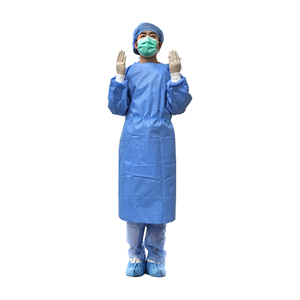
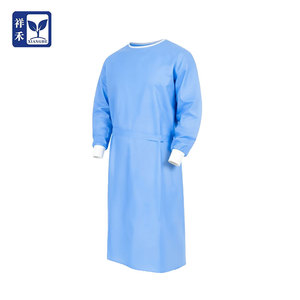
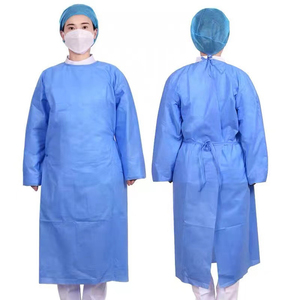
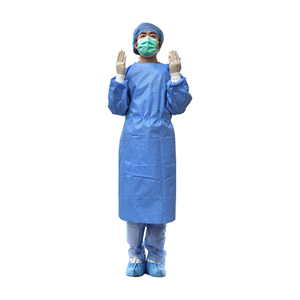
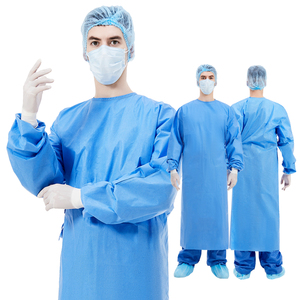
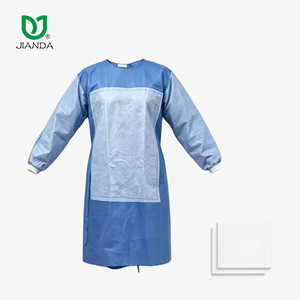
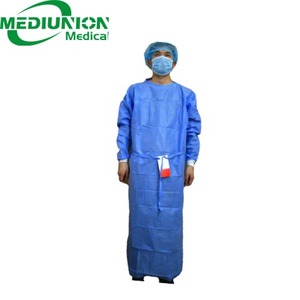
As Bulgaria advances its medical infrastructure across major clinical hubs—including Sofia, Plovdiv, Varna, Burgas, and Ruse—the demand for verified high-barrier perioperative protection has increased substantially. Hospitals operating under the Bulgarian National Health Insurance Fund (NHIF / НЗОК) alongside leading private medical centers (such as Acibadem City Clinic, Sofiamed, and MHAT Pirogov) are aligning their clinical infection prevention protocols strictly with European Union Directives. For hospital procurement managers, surgical department heads, and medical supply importers, sourcing compliant high-protection surgical gowns is no longer just a purchasing routine; it is a critical mandate to prevent Surgical Site Infections (SSIs) and maintain cross-contamination control during high-fluid surgical interventions.
Regulatory Directive Note: All surgical drapes, isolation apparel, and surgical gowns imported into Bulgaria must strictly comply with the European Medical Device Regulation (EU MDR 2017/745) and bear verified CE marking registered with the Bulgarian Drug Agency (BDA / Изпълнителна агенция по лекарствата - ИАЛ).
Our manufacturing and export platform delivers an end-to-end medical non-woven solution tailored to the tender and commercial procurement specifications of the Bulgarian healthcare market. By combining advanced multishield SMS/SMMS non-woven technology with hotmelt lamination, ultrasonic seam construction, and rigorous Ethylene Oxide (EO) sterilization validation under ISO 11135, we offer Bulgarian medical institutions unmatched liquid barrier integrity without compromising surgeon comfort and thermal breathability.
Understanding the distinction between standard isolation gowns and true, high-protection operating room surgical gowns requires deep examination of the underlying textile science. Disposable medical gowns supplied to Bulgarian operating suites are categorized based on two primary international benchmarks: EN 13795 (Surgical clothing and drapes - Requirements and test methods) and AAMI PB70 (Liquid barrier performance and classification of protective apparel).
Our SMMS and SMMMS fabrics integrate high-tensile spunbond outer layers for tear resistance, sandwiching ultra-fine meltblown microfiber webs that act as an impenetrable filter matrix against pathogens, bloodborne particles, and aerosols.
For high-fluid procedures such as orthopedic joint replacements or C-sections, our Level 4 reinforced gowns feature poly-laminated chest and forearm panels capable of withstanding hydrostatic pressures exceeding 100 cm H2O.
Standard needle stitching leaves needle holes that permit fluid strike-through under pressure. Our premium surgical gown range utilizes 100% ultrasonic hermetic seam welding, eliminating pinhole leakage across critical sleeve joints.
To assist Bulgarian hospital tender committees in drafting accurate technical procurement sheets, the matrix below details the mechanical and fluid resistance metrics of our surgical gown lineup:
| AAMI Level | Critical Zone Penetration Test | Hydrostatic Pressure (AATCC 127) | Impact Penetration (AATCC 42) | Viral Penetration (ASTM F1671) | Recommended Clinical Scenarios in Bulgaria |
|---|---|---|---|---|---|
| Level 1 | Water Impact Test | N/A | ≤ 4.5g | Not Required | Basic clinical care, standard ward patient handling, visitor protection. |
| Level 2 | Water Impact & Hydrostatic Test | ≥ 20 cm H2O | ≤ 1.0g | Not Required | Minimally invasive diagnostic procedures, outpatient suturing, ophthalmology. |
| Level 3 | Water Impact & Hydrostatic Test | ≥ 50 cm H2O | ≤ 1.0g | Not Required | General abdominal surgery, laparoscopy, ENT, urological interventions. |
| Level 4 | Bacteriophage / Viral Penetration | ≥ 100 cm H2O | 0.0g (No Penetration) | Pass (ASTM F1671) | Orthopedic arthroplasty, cardiovascular bypass, emergency trauma, high-fluid cases. |
Healthcare facilities across Bulgaria exhibit diverse surgical demands depending on hospital specialization, patient turnover, and regional surgical volume. Our custom procedure gowns and sterile drapes are specially pre-configured to adapt to local clinical workflows:
Emergency departments face unpredictable fluid exposures during complex trauma revivals. Utilizing our AAMI Level 4 Reinforced Surgical Gowns with breathable SMMS back panels ensures that emergency surgical teams in busy centers remain completely protected against heavy blood splash while maintaining thermal regulation during extended procedures.
Joint arthroplasty involves continuous fluid irrigation and high physical stress on protective clothing. Our ultrasonic sealed, tear-resistant reinforced gowns feature set-in or raglan sleeves with extended knit cuffs, preventing sleeve roll-back when double-gloving in sterile orthopedic suites.
High fluid volumes inherent to Caesarean sections necessitate specialized liquid collection systems and barrier gowns with PE/PP film lamination in critical areas. Our liquid-proof, anti-static surgical gowns prevent strike-through to scrub suits, shielding clinicians from amniotic fluids and pathogens.
The medical apparel market in Eastern Europe—and Bulgaria specifically—is undergoing structural shifts driven by regulatory, economic, and technological factors:
Supply Chain Security for Bulgarian Importers: By shipping directly via maritime ports (Varna, Burgas) or overland freight networks through Southeastern Europe, our logistics arm ensures steady supply continuity, customs documentation readiness, and stable buffer stock availability for contract distributors.
As a global leader in perioperative infection prevention and single-use surgical apparel manufacturing since 2002, our company operates four state-of-the-art production facilities equipped with Class 100,000 (ISO 8) and Class 10,000 (ISO 7) cleanrooms. We provide complete OEM, ODM, and private-label customization for Bulgarian healthcare companies and group purchasing organizations (GPOs).
Every raw fabric roll and finished gown batch undergoes internal testing for hydrostatic head resistance, tensile strength, bursting pressure, surface linting (ISO 9073-10), and particle generation before sterilization release.
Our dedicated lamination lines combine breathable PE microporous films with soft non-woven inner layers, creating a light, flexible barrier gown that minimizes thermal stress while completely blocking liquid penetration.
We provide complete artwork customization, multi-language Instructions for Use (IFU) in Bulgarian, customized EAN-13 / GS1 DataMatrix barcodes, and tender-ready box packaging conforming to local labeling regulations.
Essential guidance for hospital procurement agents, medical supply distributors, and tender managers in Bulgaria.
Partner with a trusted global OEM manufacturer. Receive comprehensive technical dossiers, EN 13795 compliance documentation, and competitive wholesale pricing for high-protection surgical gowns today.