
Certified high-barrier single-use operating room attire engineered with SMS, SMMS, and SMMMS non-woven technologies to meet stringent Uruguayan MSP and Mercosur clinical hygiene guidelines.
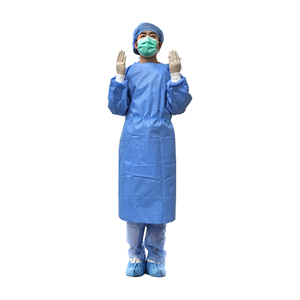
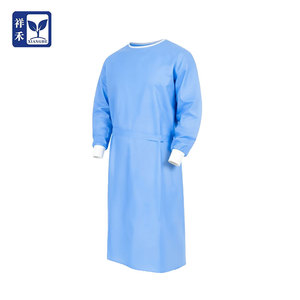
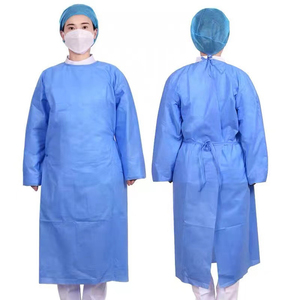
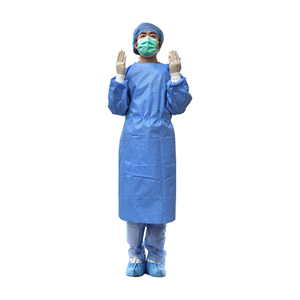

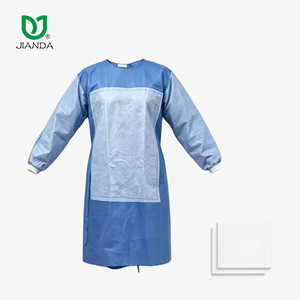
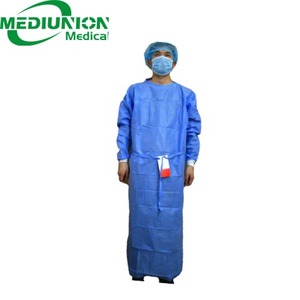
Modern surgical procedures involve varying degrees of fluid exposure, mechanical stress, and pathogen transmission risks. As a premier international manufacturer supplying healthcare facilities across Uruguay and South America, our barrier garments are engineered through advanced polymer science, combining high hydrostatic pressure resistance with physical breathability.
Composed of spunbond outer layers for tensile strength and meltblown inner filtration micro-fibers that arrest microbial vectors down to 0.5 microns.
Eliminates needle puncture holes standard in conventional sewing, creating an unbroken fluid barrier along sleeve, shoulder, and critical structural stress joints.
High particle resistance minimizes airborne lint contamination within laminar air flow operating theatres, mitigating post-operative Surgical Site Infections (SSIs).
Under the standardized testing protocols of ANSI/AAMI PB70 and EN 13795, surgical gowns are classified based on liquid barrier capabilities across critical zones (chest, sleeves, and front seams). The selection matrix below outlines performance parameters engineered into our specialized production lines:
| AAMI PB70 Level | Fluid Resistance Standard | Hydrostatic Pressure (cm H2O) | Impact Penetration (g) | Recommended Clinical Application |
|---|---|---|---|---|
| AAMI Level 1 | AATCC 42 (Water Impact) | N/A | ≤ 4.5g | Basic care, outpatient examination, standard visitor protective wear. |
| AAMI Level 2 | AATCC 42 & AATCC 127 | ≥ 20 cm | ≤ 1.0g | Minimally invasive surgery, diagnostic endoscopy, ophthalmic procedures. |
| AAMI Level 3 | AATCC 42 & AATCC 127 | ≥ 50 cm | ≤ 1.0g | General abdominal surgery, laparoscopic resections, open arterial repairs. |
| AAMI Level 4 | ASTM F1670 (Blood) & ASTM F1671 (Viral) | Impermeable (> 100 cm) | 0.0g (Zero Strike-Through) | Orthopedic total joint replacements, trauma surgery, high-irrigation cardiac cases. |
Uruguay's healthcare architecture operates through a dual public-private framework: the public sector coordinated by ASSE (Administración de los Servicios de Salud del Estado) and the private network governed by IAMC (Instituciones de Asistencia Médica Colectiva / Mutualistas), alongside prestigious clinical institutions such as Hospital de Clínicas, Hospital Británico, and Sanatorio Americano in Montevideo.
Each clinical environment demands specific personal protective gown configurations tailored to regional procedural volumes and infection control protocols:

Medical protective textiles imported into Uruguay must comply with regulations enforced by the MSP (Ministerio de Salud Pública de Uruguay). Our complete technical dossiers—including ISO 13485:2016 certifications, biocompatibility studies (ISO 10993), and sterilization validation reports—streamline local registration for Uruguayan distributors.
Uruguayan hospitals are rapidly phasing out legacy woven cotton gowns in favor of engineered single-use SMS/SMMS gowns. Reusable cotton garments experience progressive barrier degradation after repeated laundering, whereas synthetic single-use gowns deliver standardized barrier protection every single time.
Direct ocean container shipping to the Port of Montevideo or bonded warehouse routing via regional free trade zones ensures efficient customs clearance, minimal port demurrage, and streamlined distribution across Uruguay and neighboring Mercosur trading partners.

With over two decades of dedicated focus on perioperative infection prevention, our enterprise operates state-of-the-art cleanroom facilities engineered specifically for medical device manufacturing. Key institutional strengths include:
Answers to common regulatory, logistical, and technical inquiries from hospital buyers and medical suppliers serving the Uruguayan market.
We provide complete technical documentation packages—including CE certificates, ISO 13485:2016 system approvals, biocompatibility data, sterilization validation reports, and declarations of conformity—to facilitate smooth registration with the Ministerio de Salud Pública (MSP) by your authorized Uruguayan importing entity.
For customized OEM or private-label orders, our standard MOQ is typically 10,000 pieces per gown specification. However, for consolidated shipments combining surgical gowns, drapes, and procedure packs, flexible MOQs can be arranged to optimize ocean freight logistics to the Port of Montevideo.
Our Level 4 surgical gowns utilize advanced microporous or SMMMS breathable back panels paired with impervious poly-laminated reinforced zones on the chest and sleeves. This dual-zone construction provides maximum fluid barrier protection where exposed, while allowing thermal heat moisture to escape from the back during extended surgeries.
Yes. We specialize in private-label manufacturing for international medical distributors. We offer customized primary pouch printing and outer carton master labelling in Spanish/English, complete with GTIN barcodes, batch numbers, manufacture/expiry dates, and custom sizing (M, L, XL, XXL, XXXL) optimized for local healthcare staff preferences.
Our disposable surgical gowns are sterilized using validated Ethylene Oxide (EO) processing compliant with ISO 11135 standards, ensuring residual EO levels remain well below safe medical thresholds (ISO 10993-7). When stored in sealed medical-grade pouches, the sterile gowns maintain a certified shelf life of 5 years.
While reusable cotton garments appear economical initially, they incur high recurring costs in water, thermal energy, chemical laundering, quality inspection, manual folding, and autoclave sterilization. Furthermore, cotton fibers degrade after 30-50 wash cycles, compromising barrier protection. Single-use SMS/SMMS gowns deliver guaranteed barrier safety, eliminate cross-contamination hazards, and stabilize per-procedure budgetary planning.