

Navigating Medical Disposables Procurement: China Manufacturing for the Swedish Healthcare Ecosystem
The procurement landscape for single-use surgical disposables and pre-operative skin antisepsis products in Sweden—governed by Region procurement boards such as Region Stockholm, Region Västra Götaland, and Region Skåne—demands an uncompromising alignment between cost efficiency, stringent microbiological safety, and environmental accountability. As Swedish healthcare entities transition toward higher MDR (EU 2017/745) compliance standards, hospital procurement specialists and B2B medical supply distributors are actively seeking direct manufacturing partnerships with premier Chinese production facilities capable of offering validated barrier performance, standardized production transparency, and customizable OEM/ODM solutions.
As a veteran OEM/ODM manufacturer specializing in medical non-wovens, sterile drapes, surgical gowns, and Chlorhexidine Gluconate (CHG) swab sticks/applicators, our operational structure integrates advanced material science with strict cleanroom control. This white paper analyzes how top-tier China factories meet the specific regulatory, clinical, and environmental requirements of the Swedish healthcare market.
Information Gain Key Insight: Swedish medical procurement boards under Lag (2016:1145) om offentlig upphandling (LOU) prioritize suppliers with comprehensive ISO 13485:2016 quality systems, validated EN 13795 liquid/microbial barrier ratings, and documented packaging sustainability (ISO 11607).
1. Clinical Application Scenarios in Swedish Hospitals & Clinics
Modern perioperative care in Sweden relies on multi-layered infection control pathways. China's leading medical disposable factories provide essential consumables tailored to distinct clinical touchpoints across Nordic surgical workflows:
Pre-Operative Skin Prep
Utilizing CHG (Chlorhexidine Gluconate) swab sticks and applicator systems (2% CHG in 70% IPA) for rapid, broad-spectrum skin antisepsis prior to invasive procedures. Designed to meet Swedish Socialstyrelsen infection prevention guidelines.
Orthopedic & High-Fluid Surgery
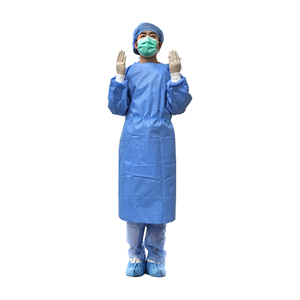
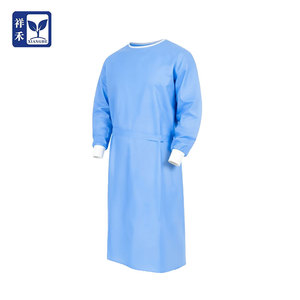
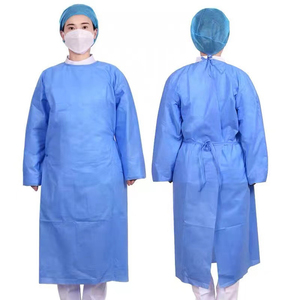
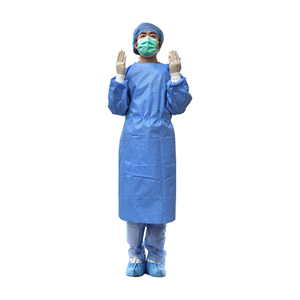
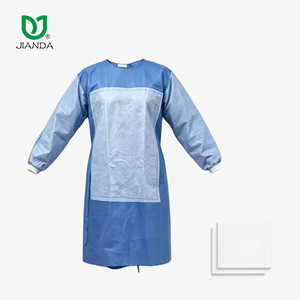
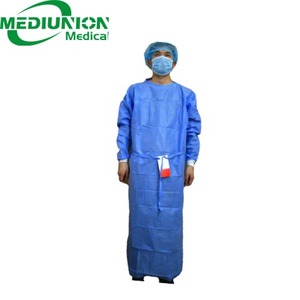
Deploying AAMI Level 4 and EN 13795 High Performance reinforced gowns paired with specialized drape sets featuring integrated fluid collection pouches, maintaining sterile boundary integrity under heavy irrigation load.
Customized Procedure Packs
Bundling surgical drapes, gown sets, equipment covers, and prepping swab sticks into single-use sterile procedure packs (CPTs) configured specifically to match Karolinska or Sahlgrenska hospital operating room setup protocols.
2. Technical Standards Matrix: AAMI PB70 vs. EN 13795 Compliance
For Swedish medical buyers, technical equivalence and precise barrier qualification are non-negotiable. The matrix below outlines how Chinese technical non-woven gowns and prep swabs align with international standards enforced within the EU:
| Classification / Parameter | AAMI PB70 (US Standard) | EN 13795 (European Standard) | China Factory Quality Benchmark |
|---|---|---|---|
| Level 2 / Standard Performance | Water impact < 1.0g; Hydrostatic pressure > 20cm H2O | Resistance to liquid penetration ≥ 10cm H2O | 35-45gsm Hydrophobic SMS non-woven; low linting index |
| Level 3 / High Performance | Water impact < 1.0g; Hydrostatic pressure > 50cm H2O | Resistance to liquid penetration ≥ 30cm H2O | SMMS / SMMMS multilayer structure with ultrasonic sealed seams |
| Level 4 / Critical Zone Reinforcement | Viral penetration resistance (ASTM F1671) under pressure | Microbial penetration resistance (wet/dry) ≥ 100cm H2O | Hotmelt PE/PP lamination + breathable membrane reinforcing sleeves & chest |
| Skin Prep Swab Sticks (CHG) | USP / FDA Antiseptic Monograph standard | EN 12791 / EN 13727 bactericidal efficacy criteria | 2% CHG / 70% IPA formulations in medical-grade sponge & molded handle |
3. Localized Development Trends in the Swedish Healthcare Sector
The Swedish medical supply market is undergoing structural shifts driven by regulatory tightening and sustainability mandates. To remain competitive, Chinese manufacturing partners must adapt to these localized trends:
- EU MDR 2017/745 Transition: Legacy CE certificates under MDD 93/42/EEC are being phased out. Leading Chinese factories have proactively secured EU MDR Class I and Class IIa/IIb sterile device certifications, complete with updated Technical Documentation Files (TDF) and Unique Device Identification (UDI) compliance.
- Green Procurement & Decarbonization (Miljökrav): Swedish public tenders increasingly evaluate the carbon footprint of imported disposables. Manufacturing processes now incorporate bio-based PP non-wovens, recycled packaging foils, and optimized packing density to lower maritime transport emissions to Gothenburg and Stockholm ports.
- Supply Chain Security & Buffer Stocking: Post-pandemic resilience protocols mean Swedish distributors favor China partners offering multi-factory redundancy, rapid raw material sourcing (high-grade medical polypropylene), and OEM private-label support for regional consignment safety stocks.
4. Enterprise Manufacturing Strengths & E-E-A-T Capabilities
Our production facilities represent the pinnacle of modern Chinese medical manufacturing. Engineered to fulfill the high expectations of European buyers, our factory highlights include:
Cleanroom Environment
Operating 100,000 (Class 8) and 10,000 (Class 7) cleanrooms certified under ISO 14644, preventing airborne particulate and bioburden contamination during assembly and primary packaging.
Vertical Integration
In-house non-woven fabric extruders, hotmelt laminators, ultrasonic welding machinery, and automated swab stick molding lines ensure end-to-end quality control and cost efficiency.
In-House Testing Laboratory
Every production batch undergoes internal hydrostatic head testing, tensile strength evaluation, linting quantification, bioburden assay, and EO sterilization residual verification.