
Standardized and custom-configured pre-assembled sterile surgical packs manufactured in Class 100,000 cleanrooms. Optimized for rapid aseptic opening, minimal particulate contamination, and Japanese surgical ergonomics.

Japan’s healthcare landscape operates under rigorous quality expectations, defined by the Pharmaceuticals and Medical Devices Act (PMDA), Japanese Industrial Standards (JIS T), and an overarching cultural standard of zero-defect manufacturing (*Monozukuri*). As Japanese hospitals and outpatient medical centers navigate acute nursing shortages and implement mandatory Work-Style Reforms (*Hatarakikata Kaikaku*), the adoption of single-use, CE-marked pre-assembled sterile suture trays has emerged as a cornerstone strategy for operational efficiency and surgical site infection (SSI) reduction.
Importing suture trays into Japan requires seamless alignment between European CE marking (EU MDR 2017/745 Class I/IIa sterile) and Japan’s Foreign Medical Device Manufacturer (FMDM) registration. Our technical dossiers, complete with ISO 10993 biocompatibility testing, ISO 11135 EO sterilization validation, and ISO 11607 packaging shelf-life data, provide Japanese importers with immediate turn-key submission assets.
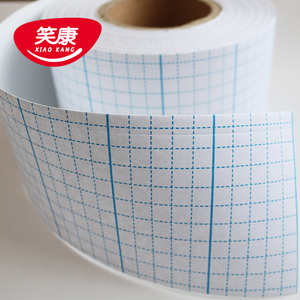
Japanese surgeons and operating room nurses demand rigid component sequencing. Our custom suture procedure trays feature multi-compartment thermoformed rigid trays with built-in needle counters, precision-ground Japanese-spec stainless steel iris scissors, Adson tissue forceps, needle holders, and absorbent non-woven drapes with high-tack hypoallergenic medical adhesives.
In accordance with JIS T 8022 and EN 13795 standards, our suture trays utilize medical-grade SMS/SMMS non-woven materials treated with hydro-entangled technology. This ensures ultra-low particle generation, preventing foreign body reactions or micro-granuloma formation in delicate suturing environments such as plastic surgery and ophthalmic procedures.
Evaluating critical engineering parameters, sterilization assurance levels (SAL), and clinical efficiency metrics for hospital procurement teams in Tokyo, Osaka, and regional prefectures.
| Evaluation Parameter | Conventional Suture Trays | Surgeine CE-Certified Suture Trays (Japan Spec) | Clinical Advantage for Japanese Hospitals |
|---|---|---|---|
| Sterilization Assurance Level | SAL 10⁻³ (Standard) | SAL 10⁻⁶ Validated (EN 556-1 / ISO 11135) | Zero contamination risk; compliant with PMDA strict sterility assurance. |
| Instrument Precision & Material | Basic carbon steel / re-usable components | AISI 410/304 Medical Stainless Steel | Zero burrs under magnification; ideal for delicate Japanese cosmetic/plastic suturing. |
| Packaging Integrity & Peeling | Standard paper/film pouches (susceptible to fiber tearing) | Tyvek® / Medical Grade Fiber-Free Film Sheeting | Clean aseptic peel without particle shedding into the sterile field. |
| Traceability & Barcoding | Single-lot label | GS1 DataMatrix & UDI Compliant Labels | Direct scanning integration with Japanese hospital EHR and ERP inventory management systems. |
| Prep Time Reduction | 7 - 12 Minutes per case | < 90 Seconds Pre-Assembled Setup | Supports Hatarakikata Kaikaku by significantly reducing nurse overtime and setup stress. |
Our CE-certified suture procedure packs are customized to address the specific spatial, procedural, and environmental demands of various clinical environments in Japan.
In high-pressure Japanese ERs, speed and sterility are paramount. Pre-sterilized, all-in-one suture trays containing prep swabs, fenestrated drapes with adhesive borders, gauze swabs, micro-forceps, and needle holders eliminate component gathering, ensuring immediate laceration management and trauma suturing upon patient intake.
Japanese aesthetic surgery requires meticulous scar minimization. Our plastic surgery suture trays feature ultra-fine Japanese-style Halsey micro-needle holders, Webster forceps, and high-density, low-linting non-woven towels that prevent micro-abrasions and infection along delicate tension lines.
For general practitioners and outpatient clinics (*Clinics/診療所*), storage space is highly optimized. Compact, stackable thermoformed suture trays minimize medical storage footprints while guaranteeing 100% compliance with infection prevention protocol guidelines established by the Japanese Society for Infection Prevention and Control (JSIPC).
Given Japan’s stringent earthquake and natural disaster contingency planning, municipal health authorities require long-shelf-life sterile medical kits. Our 5-year validated shelf-life suture packs with moisture-barrier secondary foil overwrapping are engineered for long-term emergency stockpile resilience.
Combining advanced vertical manufacturing integration with continuous quality controls to meet the uncompromising standards of Japanese Group Purchasing Organizations (GPOs) and medical wholesalers.
State-of-the-art Class 100,000 (ISO Class 8) and Class 10,000 (ISO Class 7) cleanrooms featuring positive pressure air filtration, automated particle monitoring, and strict gowning protocols to eliminate airborne contaminants.
Our centralized internal laboratory conducts continuous hydro-bursting tests, tensile strength evaluations, particle linting checks, and EO gas residue testing (ISO 10993-7) for every lot before export release.
Full OEM adaptation including localized Japanese artwork, JAN code / GS1 barcode integration, multi-language Instructions for Use (IFU in Japanese), and custom primary tray layout configurations.
Contact our regulatory specialists and B2B export engineering team to receive complete product catalogs, PMDA support documentation, and clinical evaluation samples.
Addressing key technical, regulatory, and commercial queries regarding CE-certified suture trays for the Japanese market.
Our manufacturing sites operate under strict ISO 13485:2016 certification and hold CE Marking under EU MDR 2017/745. For Japanese distributors registering products under the Pharmaceuticals and Medical Devices Act (PMDA), we provide comprehensive Technical Files, ISO 11135 EO Sterilization Validation Data, ISO 10993 Biocompatibility Test Reports, and Device Master Files (DMF) to accelerate Foreign Medical Device Manufacturer (FMDM) approval.
Yes. We specialize in custom-tailored procedure kits. Japanese hospitals often prefer specific drape sizes (e.g., small fenestrations for facial suturing), specific non-woven material densities, and specialized stainless-steel surgical instruments. Our dedicated procedure pack production lines enable custom tray compartment design, specific component arrangement, and specialized folding sequences.
Ethylene Oxide (EO) sterilization undergoes rigorous quarantine and aeration cycles. Every batch is evaluated in-house using Gas Chromatography (GC) to verify that Ethylene Oxide (EO) and Ethylene Chlorohydrin (ECH) residual levels fall well below the limits mandated by ISO 10993-7 and Japanese safety standards, ensuring total biocompatibility for sensitive wound care.
We offer comprehensive private-label OEM manufacturing for Japanese medical device brands and GPOs. This includes customized packaging artwork, Japanese language labeling (including Kanji/Kana instructions and warning statements), JAN barcodes, GS1-128 / DataMatrix UDI symbols, and inner/outer carton packaging designed for Japanese hospital shelf logistics.
Physical prototype sample trays for clinical evaluation can be produced and dispatched within 7 to 10 days. Upon sample approval and contract finalization, production lead time for standard container shipments typically ranges between 20 to 30 days, supported by complete shipping documentation, Certificate of Analysis (CoA), and Sterilization Certificates for Japanese customs clearance.
Elevate your medical product portfolio with ISO 13485 and CE MDR compliant suture packs engineered specifically for the precision requirements of the Japanese healthcare sector. Contact our international export department today.