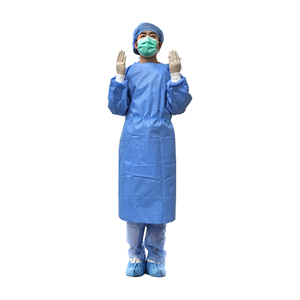

Engineered for high-fluid orthopedic procedures, total joint arthroplasty, and trauma surgery. Built using medical-grade SMMS/SMS non-wovens to eliminate microbial strike-through.
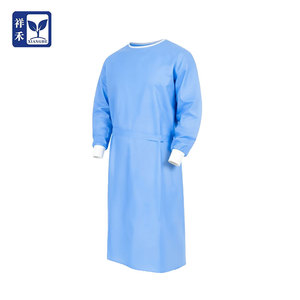
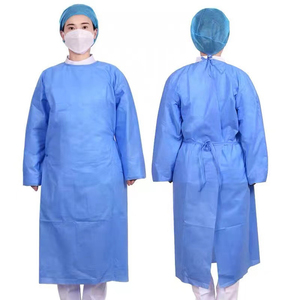
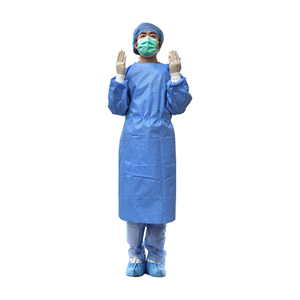

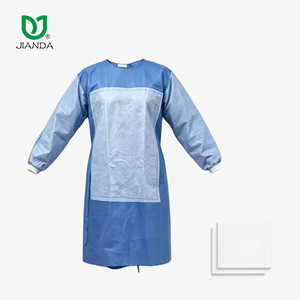
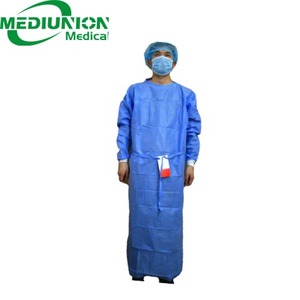
Executive Summary for Hospital Procurement Teams: Modern major joint replacements—such as Total Knee Arthroplasty (TKA) and Total Hip Arthroplasty (THA)—involve continuous high-pressure fluid irrigation, heavy mechanical instrumentation, and extended operative times. Standard single-use drapes fail under high fluid loads. As a leading specialized orthopedic packs exporter, our sterile drape systems and AAMI Level 4 surgical gowns incorporate multi-layer SMMS non-woven membranes, integrated fluid-collection pouches, and antimicrobial incise films to prevent surgical site infections (SSIs).
Understanding the physics of fluid strike-through, barrier classifications, and material lamination in orthopedic theater protocols.
Orthopedic procedures demand strict compliance with ANSI/AAMI PB70 Level 4 standards. Critical zones (chest, sleeves, and drape fenestrations) must resist viral penetration under hydrostatic pressure testing (ASTM F1671) and synthetic blood resistance (ASTM F1670). Our SMMS and PE-film laminated drapes maintain a hydrostatic head resistance exceeding 100 cm H2O.
During shoulder arthroscopy or hip revisions, fluid volumes can exceed 5 to 10 liters. Our specialized orthopedic packs feature heavy-duty, anti-glare, transparent polyethylene pouches equipped with dual exit ports, fluid-filter screens, and malleable rim wires to channel runoff away from the patient and surgical team.
Preventing bacterial recolonization from patient skin flora is critical in implant surgeries. Our orthopedic drapes integrate breathable, iodophor-impregnated polyurethane incise films that adhere securely to skin contours alongside heavy-duty, high-stretch tubular stockinettes to isolate extremities.
| Performance Specification | Standard Surgical Drape Kit | Surgeine High-Barrier Orthopedic Pack | Testing Protocol Benchmark |
|---|---|---|---|
| Hydrostatic Pressure (Critical Zone) | < 50 cm H2O | > 110 cm H2O | AATCC 127 / ISO 811 |
| Synthetic Blood Penetration | Passes Level 2/3 | Passes Level 4 (20 kPa) | ASTM F1670 / ISO 16603 |
| Viral Penetration Resistance | Not Rated | Passes Phi-X174 Bacteriophage | ASTM F1671 / ISO 16604 |
| Particle Linting Index | Medium Linting (> 3.5 Log10) | Ultra-Low Linting (< 1.8 Log10) | EN ISO 9073-10 |
| Fluid Handling Capacity | 1.5 Liters Absorption | 7.0+ Liters Collection & Pouch Drain | Internal Volumetric Test |
How global healthcare supply chains, sustainability mandates, and regulatory shifts are reshaping orthopedic pack sourcing.
Global hospital networks and distributors are phasing out suppliers operating under legacy MDD certification. Future-proof procurement requires direct partnership with certified exporters who hold comprehensive Technical Documentation under EU MDR 2017/745, complete with UDI (Unique Device Identification) traceability and clinical evaluation reports (CER).
Operating Room turnaround time (TAT) directly impacts surgical efficiency. Group Purchasing Organizations (GPOs) are shifting toward custom-engineered procedure packs tailored to specific surgeon preference cards. Assembling incise drapes, camera covers, Mayo stand covers, and AAMI Level 4 gowns in a single sterile wrap reduces setup times by up to 40% and cuts packaging waste.
Environmentally conscious hospital procurement is driving R&D into bio-based polyolefins, recyclable mono-material SMMS structures, and reduced-GSM high-strength fibers. Future orthopedic drapes will deliver maximum barrier protection while minimizing carbon emissions across production and incineration cycles.
Combining vertically integrated manufacturing, cleanroom production, and rigorous quality assurance.
Our four manufacturing facilities feature dedicated ISO Class 8 (Class 100,000) and ISO Class 7 cleanrooms equipped with automated folding, hotmelt lamination, and ultrasonic sealing lines to preserve product sterility prior to EO processing.
Every lot undergoes rigorous internal quality checks: hydrostatic head testing, tensile and burst strength verification, linting evaluation, and EO residue analysis (ISO 10993-7) to ensure total safety before international shipment.
We empower international healthcare distributors with private labeling, multi-language artwork adaptation, specialized packaging designs (blister packs or pouch packs), and full regulatory dossier support for swift local market registration.
Direct technical answers addressing regulatory compliance, pack customization, and supply chain logistics.
A standard orthopedic pack is tailored to specific procedures (e.g., Total Hip Replacement, Knee Arthroplasty, Extremity, or Shoulder Arthroscopy). Key components include: high-barrier orthopedic main drape with integrated fluid collection pouch and fenestration, iodine-impregnated incise drape, stockinettes, Mayo stand cover, light handle covers, suction tubing, cable holders, skin markers, and AAMI Level 4 reinforced gowns for the primary surgical team.
Our surgical gowns and drapes undergo independent testing against ANSI/AAMI PB70 and EN 13795 requirements. Critical zones meet AAMI Level 4 fluid and viral resistance standards (resisting synthetic blood at 20 kPa under ASTM F1670 and bacteriophage penetration under ASTM F1671). Non-critical areas utilize breathable SMMS fabrics for thermal comfort.
Yes. As an experienced orthopedic packs exporter, Surgeine operates a dedicated customization facility. Hospital procurement managers can specify component brands, drape sizes, folding sequences, pack orientation, tray layouts, and localized packaging artwork. We provide sterile validation samples prior to bulk manufacturing.
Surgeine Healthcare operates an ISO 13485:2016 certified quality management system. Our product families hold CE Marking under EU MDR 2017/745, SFDA approvals, BIS certification, and ZED Gold status. We provide complete technical files, declarations of conformity, and sterilisation validation certificates for import registration.
Products are sterilized using Ethylene Oxide (EO) gas in validated chambers according to ISO 11135 standards. Residual EO levels are monitored via gas chromatography to guarantee compliance with ISO 10993-7 allowable limits, ensuring absolute sterility and bio-compatibility.
Contact our global export team today to request custom pack quotations, technical specs, sample kits, or regulatory support for your market.
Get Catalog