
Explore our hospital-grade medical disposables portfolio engineered for operating rooms, intensive care units, and clinical examination. Every product is certified for fluid resistance, microbial filtration, and zero linting.
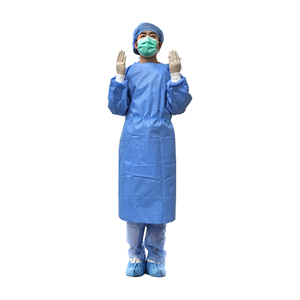
Heavy-duty SMMS breathable barrier nonwoven fabric designed for high-fluid surgical procedures with maximum splash resistance.
Contact Us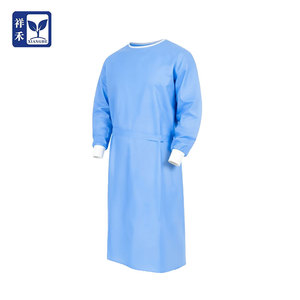
Ethylene Oxide sterilized operating room protective apparel with ultrasonic seam sealing to eliminate particulate penetration.
Contact Us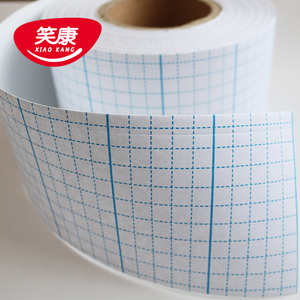
Premium Grade polypropylene non-woven material optimized for surgical face mask outer barrier layers and surgical drapes.
Contact Us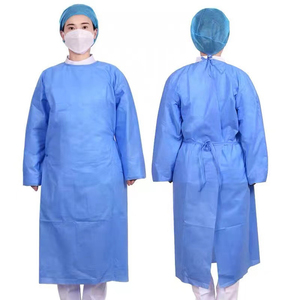
High-capacity medical disposable production for clinical staff and hospital inventory replenishment with full batch traceability.
Contact Us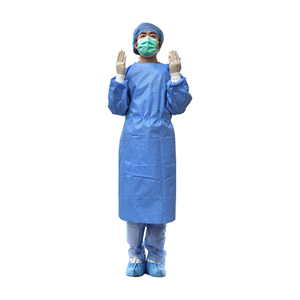
Triple-layer high-filtration medical mask system featuring electret meltblown filter media for clinical examination and minor surgeries.
Contact Us
Laminated non-woven barrier protection preventing liquid strike-through during prolonged orthopedic and cardiovascular surgeries.
Contact Us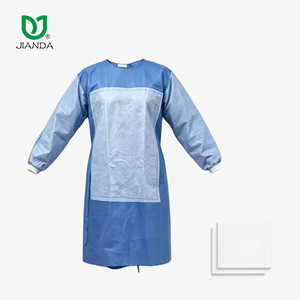
Ultrasonically bonded tie-on and earloop surgical face masks offering superior comfort, low breathing resistance, and high fluid containment.
Contact Us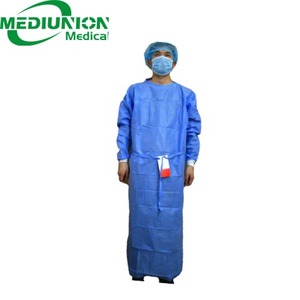
EU MDR compliant sterile 3-ply surgical masks engineered with memory nose bridge wire for anti-fog optical clarity in operating rooms.
Contact UsAs a premier B2B manufacturer and OEM supplier of disposable surgical masks in China, our production framework is built on rigorous infection prevention, vertical material integration, and international regulatory compliance. We operate state-of-the-art 100,000-class (ISO Class 8) cleanrooms equipped with fully automated ultrasonic mask welding machines, inline optoelectronic vision detection systems, and automated blister packaging units.
Unlike secondary assembly plants, our facility maintains direct control over meltblown polypropylene extrusion and electro-charging processing. This internal capability guarantees consistent fiber density (fiber diameter 1.5–3.0 µm), resulting in ultra-high Bacterial Filtration Efficiency (BFE ≥ 99%) and Particle Filtration Efficiency (PFE ≥ 99%) without sacrificing breathability.
Our Quality Management System (QMS) operates in strict compliance with ISO 13485:2016 and CE marking under the EU MDR 2017/745 Regulation. Every batch of surgical masks undergoes comprehensive physical and biological testing in our accredited internal laboratory before international dispatch.
"Surgical safety is non-negotiable. Information Gain in surgical mask procurement comes from verifiable barrier metrics: synthetic blood penetration resistance under high velocity pressure, low particulate linting, and stable electret charge retention across extended storage cycles."
Selecting the correct surgical mask specification requires aligning hospital clinical risk exposure with standardized regulatory frameworks (ASTM F2100 in North America vs. EN 14683 in Europe). Below is our definitive procurement benchmark matrix:
| Performance Metric | ASTM F2100 Level 1 | ASTM F2100 Level 2 | ASTM F2100 Level 3 | EN 14683 Type II | EN 14683 Type IIR |
|---|---|---|---|---|---|
| Bacterial Filtration Efficiency (BFE) | ≥ 95% | ≥ 98% | ≥ 99% | ≥ 98% | ≥ 99% |
| Particle Filtration Efficiency (PFE @ 0.1μm) | ≥ 95% | ≥ 98% | ≥ 99% | N/A | N/A |
| Fluid Penetration Resistance (Synthetic Blood) | 80 mmHg | 120 mmHg | 160 mmHg | None Required | 120 mmHg (16.0 kPa) |
| Differential Pressure (ΔP Breathing Resistance) | < 5.0 mm H₂O/cm² | < 6.0 mm H₂O/cm² | < 6.0 mm H₂O/cm² | < 40.0 Pa/cm² | < 60.0 Pa/cm² |
| Flame Spread Classification | Class 1 | Class 1 | Class 1 | N/A | N/A |
| Clinical Risk Level Target | Low fluid risk / OPD | Moderate fluid risk | High fluid / OR Surgery | General ward care | Operating Room / High Splash |
The global medical disposables sector is undergoing a massive shift toward enhanced bio-barrier safety, eco-sustainability, and ergonomic precision. Modern hospitals no longer view surgical masks as commodities, but as high-technology infection prevention systems.
Traditional meltblown layers rely solely on electrostatic attraction, which degrades over time due to ambient humidity. Next-generation China surgical mask manufacturing incorporates electrospun nanofiber membranes. These ultra-thin mechanical filters maintain a sub-micron pore structure that physically traps viruses without losing charge efficiency during long surgical cases.
With environmental ESG requirements taking center stage in European healthcare tenders, manufacturers are industrializing Poly-Lactic Acid (PLA) spunbond fabrics derived from renewable plant sugars. These bio-based nonwovens achieve 100% industrial compostability while retaining strict fluid hydro-resistance and zero skin irritation properties.
Surgical fatigue directly impacts clinical focus. Innovations in high-frequency acoustic ultrasonic earloop welding eliminate focal point friction. By utilizing extra-soft spandex-blend flat earbands and double-core memory aluminum nose strips, modern surgical masks achieve a custom facial seal without leaving pressure marks during 12+ hour shifts.
Strategic procurement leaders in hospital networks and international medical distribution are adapting to post-pandemic supply chain dynamics. Key macro-trends shaping China surgical mask exports include:
Importers require turnkey OEM solutions that comply with country-specific medical device labeling laws. Modern manufacturing contracts now bundle localized IFUs (Instructions For Use), GS1 DataMatrix barcodes, UDI (Unique Device Identification) tagging, and custom retail or clinical box configurations directly at the cleanroom packing line.
Freight rates dictate international margins. Leading suppliers utilize automated vacuum compression packing techniques that reduce carton volume by up to 35%, maximizing 40ft High-Cube container payload while preserving mask nose strip structural integrity and fluid-barrier layer spring-back.
Detailed answers to critical technical, regulatory, and logistics queries asked by hospital purchasing agents and medical distributors.
A standard medical mask (such as Type I or Type II) provides bacterial filtration but lacks synthetic blood splash resistance. An EN 14683 Type IIR surgical mask includes a specialized hydrophobic outer layer that resists liquid penetration at a pressure of 120 mmHg (16.0 kPa), protecting operating room personnel from arterial blood spurts and fluid splashes during surgery.
Our internal laboratory tests every production lot using automated aerosol challenge chambers per ASTM F2101 and EN 14683 Annex B standards. We utilize Staphylococcus aureus aerosols (3.0 μm particle size) for BFE testing and 0.1 μm unneutralized latex spheres for PFE testing, issuing full Certificates of Analysis (CoA) with every batch shipment.
Yes. Our surgical face masks are registered as Class I Medical Devices under the EU MDR 2017/745. We maintain technical documentation files, European Authorized Representative (EC REP) registration, Declarations of Conformity, and ISO 13485 certified quality management oversight.
For standard non-sterile bulk surgical masks under factory brand, our baseline MOQ is 100,000 units. For custom private-label OEM packaging (printed inner boxes and master cartons with custom branding), the typical MOQ starts at 500,000 units, dependent on artwork complexity.
Yes. We operate industrial EO sterilization chambers on-site. Individually packaged sterile surgical masks are processed to achieve a Sterility Assurance Level (SAL) of 10⁻⁶, complete with EO gas residue analysis ensuring levels remain below 10 μg/g in compliance with ISO 11135.
Our 3-ply surgical masks feature: 1) Outer Layer: Hydrophobic Spunbond Polypropylene (25–30 gsm) to block fluid splashes; 2) Filter Layer: High-charge Electret Meltblown Polypropylene (25 gsm) for virus/bacteria filtration; 3) Inner Layer: Hypoallergenic Hydrophilic Soft Spunbond Nonwoven (20–25 gsm) for sweat absorption and skin comfort.
Our high-barrier surgical masks feature an extra-long, dual-core aluminum memory nose bridge strip that molds perfectly against nasal contours. Additionally, anti-fog foam strips can be integrated on top of the inner layer to block upward breath redirection onto surgical glasses or optical viewports.
When stored in dry, well-ventilated clean storage conditions (temperature between -20°C to +30°C and relative humidity below 80%), our surgical masks maintain a validated shelf life of 5 years. Electret charge retention tests confirm >98% filtration stability over this timeline.
With multi-line high-speed automated production units operating in 100,000-class cleanrooms, our daily output exceeds 1.5 million units of surgical face masks, ensuring rapid turnaround for hospital network tenders and international emergency supply agreements.
Absolutely. We welcome international third-party audit firms such as SGS, TÜV Rheinland, Intertek, or Bureau Veritas to conduct on-site factory audits, cleanroom particle count verifications, and pre-shipment random inspection (PSI) of final packed goods.
Ready to elevate your hospital supply chain or OEM product line with certified ASTM F2100 Level 3 & EN 14683 Type IIR surgical masks? Request technical datasheets, factory audit access, and competitive wholesale quotes today.