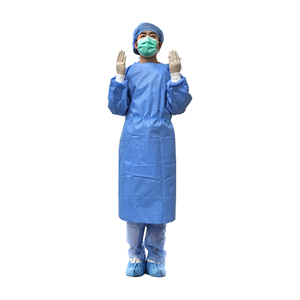
AAMI Level 4 Reinforced
Inquire Now

Explore high-performance personal protective apparel manufactured in ISO Class 8 cleanrooms with CE (EU MDR 2017/745) and ISO 13485:2016 certifications.
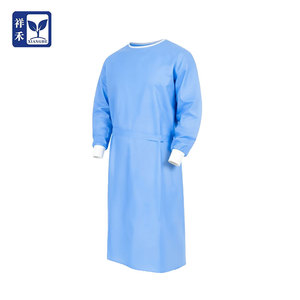
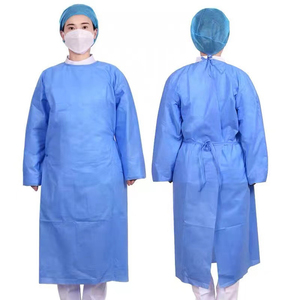
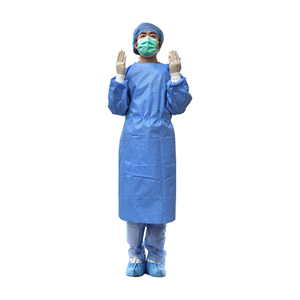

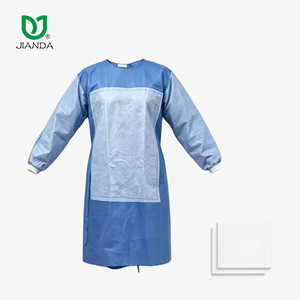
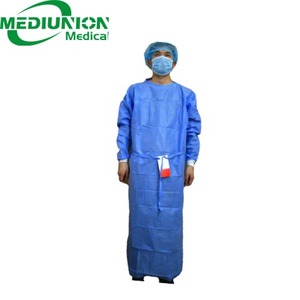
In modern healthcare settings, surgical site infections (SSIs) represent one of the most critical challenges to clinical efficacy and patient safety. Medical aprons and disposable surgical gowns act as the primary barrier of defense, mitigating cross-contamination risks between surgical teams and patients. As healthcare facilities scale up infection control protocols, the global procurement landscape has shifted from basic single-layer non-woven garments toward highly engineered multi-layer composite textiles compliant with strict international standards, including ANSI/AAMI PB70 and EN 13795.
Leading Chinese medical apparel factories have undergone a profound technical overhaul. Moving beyond low-cost commoditization, top manufacturers now operate fully automated ultrasonic seam welding lines inside ISO Class 8 (100,000 class) and Class 7 cleanrooms. Utilizing advanced material structures—such as Spunbond-Meltblown-Meltblown-Spunbond (SMMS), Polyethylene (PE) laminated film, and microporous breathable membranes—China manufacturers deliver high hydrostatic pressure resistance while ensuring optimal thermal comfort and moisture vapor transmission rates (MVTR) for healthcare personnel operating during extended procedures.

Our strategic manufacturing facilities integrate raw non-woven polymer extrusions, hot-melt film lamination, precision cutting, and cleanroom packaging under one unified quality management system compliant with ISO 13485:2016.
Selecting the appropriate liquid barrier performance level is paramount for protecting operating room personnel while optimizing hospital procurement expenditure. The American National Standards Institute (ANSI) and Association for the Advancement of Medical Instrumentation (AAMI) defined ANSI/AAMI PB70 to establish a benchmark for protective apparel.
| AAMI Level | Test Standard Requirements | Barrier Performance Target | Recommended Clinical Application |
|---|---|---|---|
| Level 1 | AATCC 42 (Water Impact < 4.5g) | Minimal Fluid Resistance | Basic care units, standard isolation, medical visitors, administrative OPD zones |
| Level 2 | AATCC 42 (< 1.0g) AATCC 127 (> 20 cm H₂O) |
Low Liquid Impact & Hydrostatic Pressure | Blood draw procedures, minor suturing, intensive care unit (ICU) routine nursing |
| Level 3 | AATCC 42 (< 1.0g) AATCC 127 (> 50 cm H₂O) |
Moderate Liquid & Hydrostatic Pressure | General surgical procedures, ENT, plastic surgery, laparoscopy, ER trauma care |
| Level 4 | ASTM F1671 (Viral Penetration Resistance) ASTM F1670 (Synthetic Blood) |
Highest Liquid & Viral Pathogen Barrier | High-fluid orthopaedic surgery, C-section delivery, cardiovascular & open-heart procedures |
* Note: Critical zones for surgical gowns include chest and sleeves. Fully reinforced aprons and gowns extend Level 4 impervious protection across the entire frontal panel.
Why leading healthcare group purchasing organizations (GPOs) and international medical distributors partner with premier Chinese medical gown factories.
Every raw material lot undergoes rigorous internal quality testing for hydrostatic head pressure, tensile strength, linting rate, and tear resistance under ISO 13485 protocols prior to batch release.
Full regulatory documentation including CE marking under EU MDR 2017/745, US FDA 510(k) registration files, BIS approval, and complete Declarations of Conformity for rapid customs clearance.
Tailored sleeve designs (raglan/set-in), tie-back/Velcro closures, customized weight (30gsm-65gsm), private label pouch artwork, and specialized custom procedure pack configurations.
Operating multi-site manufacturing hubs equipped with high-speed automated folding and packaging machinery, delivering over 5,000,000 sterile surgical units monthly to withstand supply shocks.
Integrated ERP system enforcing Unique Device Identification (UDI) compliance, lot sampling retention, and multi-language labeling adaptation for over 25 export destination countries.
Regulatory compliance is non-negotiable when dealing with sterile surgical protection. China medical apron factories maintain continuous compliance audits from international notified bodies.
Our complete technical documentation packages support distributors in rapid local medical device registration, tender submissions, and hospital clinical safety reviews.

The global medical disposable garments industry is experiencing rapid innovation driven by clinical safety mandates, environmental sustainability targets, and supply chain resiliency priorities. Procurement directors and healthcare buyers must anticipate the following key trends when structuring long-term sourcing contracts:
Shift toward polylactic acid (PLA) blends and recyclable monomaterial PP fabrics aimed at reducing medical plastic incinerations without compromising liquid barrier integrity.
Adoption of smart microporous films with active thermal regulation, preventing heat exhaustion for surgical teams during 6+ hour complex operations.
Phase-out of traditional needle stitching in favor of 100% continuous ultrasonic seam sealing to eliminate micro-gaps and maximize viral containment.
When auditing China medical apron manufacturers and factories, implementing a structured evaluation matrix ensures consistent product quality and regulatory protection:
Contact our medical technical team today to request product samples, technical dossiers, factory audit access, or custom OEM manufacturing quotes.
Inquire Now