
Direct from Factory Cleanroom Facilities: ISO 13485 & CE MDR Compliant High-Barrier Surgical Apparel for Global Healthcare Suppliers
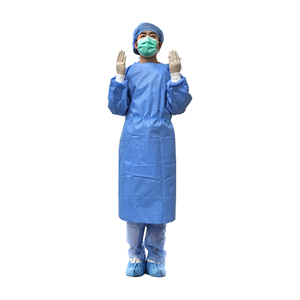
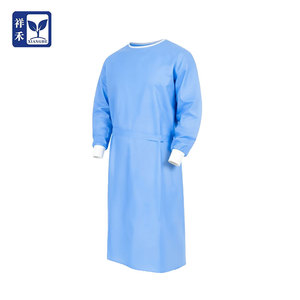
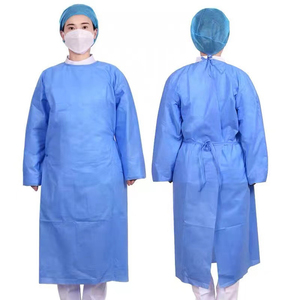
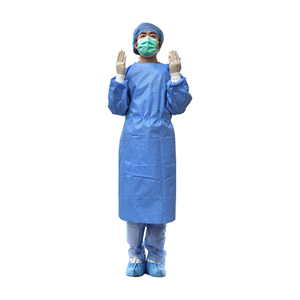

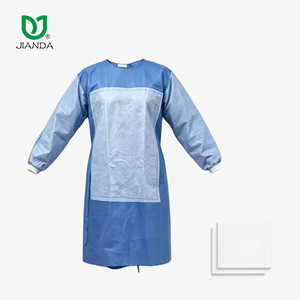
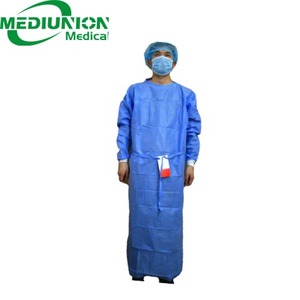
Vertical Integration from Raw Material Non-Woven Lamination to Final EO Sterilization
Maintaining continuous CE certification since 2008, our facility achieved transition to the stringent EU MDR 2017/745 regulatory framework. Supported by ISO 13485:2016 Quality Management Systems, SFDA, BIS, and ZED Gold recognitions, providing seamless importer registration worldwide.
Operating four modern industrial facilities, including a state-of-the-art specialized unit commissioned in 2023 for customized procedure packs and gown tailoring. Outfitted with Class 100,000 and Class 10,000 cleanrooms to eliminate bioburden contamination.
Every lot undergoes rigorous internal laboratory verification against AAMI PB70 and EN 13795 specifications—testing hydrostatic head fluid pressure, linting index, bursting strength, and microbial resistance under wet and dry stress conditions.
In modern operating room (OR) environments, surgical gowns serve as the primary defensive barrier against biological cross-contamination, blood-borne pathogens, and liquid strike-through. As healthcare-associated infections (HAIs) place unprecedented financial and operational strain on global health systems, medical procurement officers and OEM buyers must evaluate surgical gowns not merely as commodity non-woven garments, but as highly engineered clinical risk-mitigation devices.
Key Sourcing Takeaway: According to AAMI PB70 and EN 13795 global standards, surgical gown selection must be driven by anticipated fluid volume exposure, mechanical stress during procedure types, and barrier retention after prolonged physical movement.
The core barrier capability of a surgical gown relies on its physical material construction. OEM/ODM buyers must understand the structural differences among primary medical non-wovens:
To assist procurement directors in contract specification, the matrix below outlines global barrier performance levels and mandatory physical testing protocols:
| AAMI PB70 Classification | Impact Penetration (AATCC 42) | Hydrostatic Head (AATCC 127) | Viral Penetration (ASTM F1671) | Target Clinical Surgical Setting |
|---|---|---|---|---|
| AAMI Level 1 | ≤ 4.5 g | N/A | N/A | Basic care unit, standard isolation, visitor protection |
| AAMI Level 2 | ≤ 1.0 g | ≥ 20 cm H₂O | N/A | Endoscopy, minimally invasive diagnostic suturing |
| AAMI Level 3 | ≤ 1.0 g | ≥ 50 cm H₂O | N/A | General abdominal surgery, ENT, arterial line placements |
| AAMI Level 4 | ≤ 1.0 g | ≥ 50 cm H₂O | Pass (0 pfu/ml synthetic blood/phi-X174) | Orthopedic arthroplasty, cardiovascular, open trauma cases |
A critical point of failure in surgical gowns is needle-hole fluid leakage along structural seams. Standard sewing machines create thousands of micro-perforations through which blood and viruses can penetrate under pressure. Our factory utilizes high-frequency Ultrasonic Seam Bonding technology, fusing fabric edges together without needles or thread. For AAMI Level 4 applications, ultrasonic seams are reinforced with hotmelt liquid-proof taping to guarantee zero strike-through across critical chest and arm sleeve zones.
As a specialized contract manufacturer for international group purchasing organizations (GPOs) and regional medical brands across 25+ countries, our plant provides end-to-end OEM/ODM customization:
Key Strategic Vectors Reshaping Global Healthcare Supply Chains Over the Next Decade
Hospitals are moving away from purchasing isolated surgical gowns toward consolidated procedure packs. Assembling gowns, surgical drapes, CHG preps, and equipment covers into single sterile kits reduces operating room setup time by up to 40% and reduces packaging waste.
Environmental governance (ESG) mandates are driving interest in bio-based polypropylene, bio-degradable PLA non-wovens, and right-sized pack geometries. OEM manufacturers capable of reducing material weight while maintaining AAMI PB70 barrier integrity will gain significant tender advantages.
Post-pandemic healthcare procurement emphasizes dual-sourcing strategies, factory audit transparency, ISO 13485 lot traceability, and raw material buffer inventories to prevent critical stockouts during global health emergencies.
Addressing Common Quality, Regulatory, and Contract Manufacturing Questions from B2B Buyers
Our manufacturing facility operates an ISO 13485:2016 certified Quality Management System. We hold active CE marking under EU MDR 2017/745 (obtained in 2024), SFDA, BIS, and ZED Gold approvals. For distributor import applications and hospital tender submissions, we provide full technical file summaries, Declarations of Conformity (DoC), ISO 10993 biocompatibility reports, EO sterilization validation (ISO 11135), and lot-specific AAMI PB70 barrier test reports.
Standard factory MOQs for custom OEM private-label surgical gowns typically range from 10,000 to 20,000 units depending on raw fabric specifications (SMS, SMMS, or PE Laminated) and packaging complexity. Sample prototypes and pre-production trial batches can be prepared within 7–10 days. Full container production orders are typically fulfilled in 25–35 days.
For AAMI Level 3 and Level 4 gowns, we eliminate needle stitch holes by utilizing high-frequency ultrasonic sealing machines. In critical fluid exposure zones (sleeve assembly and chest panels), ultrasonic seams are additionally heat-sealed with specialized impermeable poly-tapes, guaranteeing total resistance to blood pressure impact and viral penetration under ASTM F1671 standards.
Yes. Our dedicated unit commissioned in 2023 specializes in custom procedure packs. Gowns can be folded according to your surgical team’s preferred aseptic technique (e.g., book-fold or neck-first fold) and co-packed with hand towels, sterile drapes, scrub brushes, CHG prep applicators, or equipment covers in a single sterile wrap.
Our internal R&D and testing laboratory evaluates raw material rolls and finished gowns from every production lot. We test hydrostatic head pressure (AATCC 127), impact water penetration (AATCC 42), tensile bursting strength (ISO 13938-1), and lint generation index (EN ISO 9073-10). Retained samples are kept for every sterilized lot throughout product shelf-life to guarantee complete auditability.