
Explore our core medical-grade single-use surgical gowns, isolation apparel, and sterile dressing kit components tailored for global hospital group tenders and distributor private-label programs.
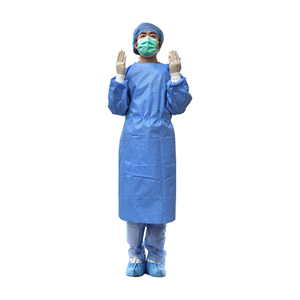

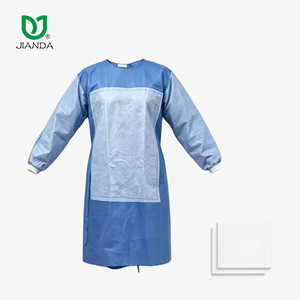
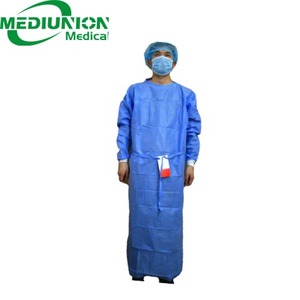
An authoritative technical evaluation of custom dressing kits, material science innovations, regulatory compliance under EU MDR 2017/745, and perioperative risk mitigation.
Surgical Site Infections (SSIs) represent up to 20% of all healthcare-associated infections worldwide. Implementing standardized, ready-to-use sterile dressing kits and surgical procedure packs eliminates pre-procedural component gathering, cuts Operating Room (OR) setup times by up to 40%, and establishes an unyielding barrier against cross-contamination during ward dressing changes and complex invasive interventions.
In global healthcare procurement, off-the-shelf medical disposables frequently introduce operational friction. Universal dressing packs often contain redundant items that clinicians discard, raising hospital waste volumes and inflating per-procedure costs. Conversely, missing essential items force clinical staff to break sterile fields to fetch additional components, exposing vulnerable wound beds to ambient pathogens.
As a leading OEM/ODM dressing kits manufacturer and exporter, Surgeine Healthcare bridges this operational gap. Operating since 2002 across four dedicated manufacturing units—including a purpose-built facility commissioned in 2023 for customized procedure packs—our OEM/ODM manufacturing engine allows healthcare chains, Group Purchasing Organizations (GPOs), and brand-name medical distributors to configure every aspect of the kit:
A high-performance OEM dressing kit is an integrated bio-barrier system. Each item within the tray must comply with strict physical, chemical, and biological safety standards. Below is an engineering overview of key kit components:
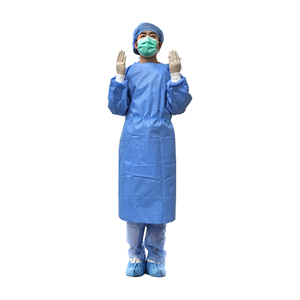
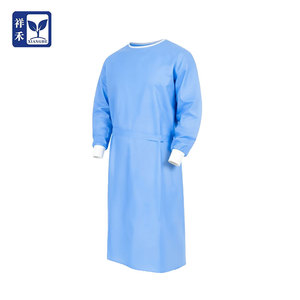
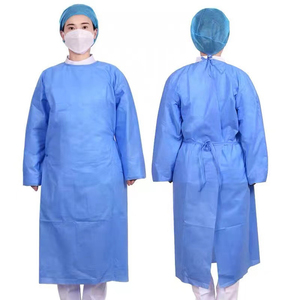
Utilizes multi-layer SMMS (Spunbond-Meltblown-Meltblown-Spunbond) technology providing hydrostatic pressure resistance exceeding 50 cm H₂O while maintaining gas permeability for heat dissipation.
Components are thermoformed into rigid, latex-free medical blister trays. Trays incorporate dedicated compartments for antiseptic solutions, waste disposal bags, and precision forceps.
100% sterile guarantee validated per ISO 11135 standards. Tyvek® or medical-grade paper peel pouches ensure a 5-year sterile shelf-life with clear chemical indicators.
When procuring OEM surgical gowns, drapes, and dressing components, buyers must evaluate technical compliance across two dominant international standards: North American ANSI/AAMI PB70 and European EN 13795.
| AAMI Level / Standard | Test Methodology | Key Performance Threshold | Primary Clinical Application Area |
|---|---|---|---|
| AAMI Level 1 | AATCC 42 (Water Resistance: Impact Penetration) | Water Impact ≤ 4.5g | Basic care, general isolation, low-fluid ward dressing |
| AAMI Level 2 | AATCC 42 & AATCC 127 (Hydrostatic Pressure) | Water Impact ≤ 1.0g, Hydrostatic Head ≥ 20cm | Minor surgical procedures, outpatient suturing, phlebotomy |
| AAMI Level 3 | AATCC 42 & AATCC 127 | Water Impact ≤ 1.0g, Hydrostatic Head ≥ 50cm | General surgery, ENT, endoscopy, wound debridement kits |
| AAMI Level 4 | ASTM F1671 (Viral Penetration Resistance) | Zero viral/microbial penetration at 2 psi | Trauma, orthopedics, cardiac surgery, high-fluid dressing change |
| EN 13795 Standard | EN ISO 22610 (Wet Microbial) / ISO 9073 (Linting) | Cleanliness-microbial ≤ 2 log10(CFU); Low Linting | European Union CE MDR operating room compliant barrier standard |
The global contract manufacturing sector for surgical disposables is undergoing rapid technological transformation. Manufacturers capable of integrating advanced material engineering into OEM offerings gain substantial market traction:
Traditional povidone-iodine preps are rapidly being replaced by Chlorhexidine Gluconate (CHG) formulations. OEM dressing kits now incorporate pre-dosed CHG swab sticks and applicators. CHG provides persistent antimicrobial activity for up to 48 hours post-application, significantly reducing cutaneous flora colonization around surgical incisions and catheter insertion sites.
Needle punctures in sewn medical apparel create micro-apertures through which fluids and viruses can migrate under pressure. State-of-the-art OEM dressing kit production lines utilize ultrasonic seam welding. By fusing thermoplastic non-woven fibers with high-frequency acoustic vibrations, ultrasonic seams form an continuous liquid-tight joint meeting ASTM F1671 viral barrier metrics.
Environmental regulatory pressure in the EU and North America is driving demand for sustainable medical packaging and biodegradable substrates. Innovations such as bio-based PLA (Polylactic Acid) spunbond layers, recycled PET tray liners, and reduced-plastic blister foils allow hospitals to cut scope 3 carbon emissions without compromising sterile barrier integrity.
B2B buyers, government health ministries, and private hospital networks are adjusting their supply chain strategies following global logistics disruptions. Essential procurement shifts include:
Hospitals are moving away from sourcing separate drapes, gowns, and dressings from disparate vendors. Partnering with a vertically integrated OEM manufacturer—capable of extruding fabric, cleanroom assembly, and in-house sterilization—reduces procurement overhead by up to 25% and ensures consistent batch quality.
With the transition from MDD to EU MDR, non-compliant manufacturers are being squeezed out of European markets. Global importers prioritize OEM suppliers that possess updated MDR CE certificates, ISO 13485:2016 quality management systems, robust post-market surveillance (PMS) data, and complete technical dossiers.
As a recognized Star Export House exporting to more than 25 countries across five continents, Surgeine Healthcare stands as a premier global partner for OEM/ODM surgical disposables. Our enterprise capability is built on five core operational pillars:
Technical clarity on custom OEM kit design, regulatory compliance, minimum order quantities (MOQs), and sterilization parameters.
MOQs depend on the level of component customization. Standard private-label packaging configuration starts at 3,000 to 5,000 kits per batch. Fully custom procedure trays requiring specialized thermoformed plastic blisters or bespoke drape dimensions generally require 10,000 units. Trial batches and validation samples can be arranged during the technical drafting phase.
Surgeine Healthcare operates under an ISO 13485:2016 certified Quality Management System. We have maintained unbroken CE marking since 2008, achieving updated certification under the rigorous EU MDR 2017/745 in 2024. Additional regional approvals include SFDA (Saudi Food and Drug Authority), BIS (Bureau of Indian Standards), and ZED Gold recognition.
Yes. Our dedicated procedure pack manufacturing unit specializes in custom kit assembly. Importers and hospital procurement leads can specify the exact component selection, drape dimensions, fenestration placement, fold sequence, tray layout, and multi-language labeling to meet exact tender specifications.
Dressing kits and surgical packs undergo validated Ethylene Oxide (EO) sterilization in compliance with ISO 11135, or Gamma Irradiation where applicable. Each package includes external and internal chemical indicators, lot numbers, sterilization dates, and expiration dates. Accelerated and real-time stability testing supports a 3-year to 5-year sterile shelf life.
Our regulatory affairs department provides comprehensive dossier support, including Free Sale Certificates (FSC), Certificates of Analysis (CoA), Biocompatibility Reports (ISO 10993), Material Safety Data Sheets (MSDS), sterilisation validation reports, and artwork adaptation to ensure rapid clearance with national health authorities.