
Explore our medical-grade surgical bandage rolls, SMS protective drapes, and sterilized procedure wraps manufactured under strict ISO 100K cleanroom conditions.

In modern hospital operating rooms, trauma wards, and outpatient clinics, the clinical efficacy of wound care and surgical retention is heavily dependent on the engineering precision of primary and secondary dressing materials. Historically dominated by simple woven cotton gauze, the medical bandage roll industry has undergone a technological revolution driven by micro-fiber extrusion, non-woven polymer lamination, and automated tension-controlled weaving. For procurement directors evaluating a China Top Bandage Rolls Factory & Supplier, evaluating raw material composition, tensile strength, microbial barrier capabilities, and linting propensity is paramount to ensuring optimal patient recovery and preventing Surgical Site Infections (SSIs).
Bandage rolls serve dual clinical functions: primary mechanical protection and fluid absorption, or secondary retention and compression therapy. The performance of these products is governed by international standards including EN 13795, AAMI PB70, ISO 10993 (Biocompatibility), and USP/EP monographs for absorbency and purity. Understanding the structural differences among substrate technologies enables hospital purchasing committees to consolidate procurement without sacrificing patient safety.
Manufactured from 100% bleached virgin cotton, traditional gauze rolls rely on defined thread counts (e.g., 13, 17, 20 threads/cm²) and yarn sizes (40s, 32s). Key performance metrics include high wicking rate (< 10 seconds), zero fluorescent whitening agents, and bioburden limits under 100 CFU/g prior to sterilization.
Formulated using Polybutylene Terephthalate (PBT), viscose, and polyamide fibers, elastic conforming bandages provide continuous, sustained gradient pressure (15–30 mmHg) without slippage. Crucial for limb immobilization, joint wrapping, and post-vascular surgery edema control.
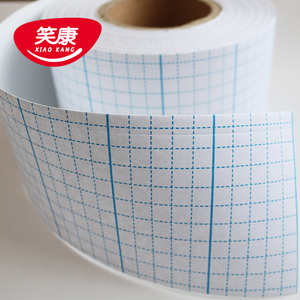
Engineered through multi-layer spunbond-meltblown polymer extrusion, SMMS wraps act as high-tier microbial barriers. Delivering absolute liquid impermeability combined with moisture vapor permeability, these substrate rolls form the backbone of sterile field creation and surgical procedure packs.
The table below presents an engineering-grade evaluation of major bandage roll categories manufactured by top tier Chinese OEM factories, contrasting fluid management, elasticity, tensile load, and clinical indication.
| Bandage Category | Material Composition | Absorbency / Hydrophobic Rate | Tensile Strength & Stretch | AAMI / EN Barrier Level | Primary Clinical Application |
|---|---|---|---|---|---|
| Absorbent Gauze Roll | 100% Virgin Bleached Cotton (17/20 mesh) | Absorbs > 5x dry weight in 5 sec | Tensile Load: > 65N (Warp) / Stretch: < 5% | N/A (Primary Absorbent) | Direct wound packing, debridement, exudate absorption |
| PBT Elastic Conforming Roll | 40% Polyester + 60% Viscose Blend | Moderate Wicking Capacity | Elongation Ratio: 160% to 200% | Class I Non-Sterile / Sterile | Secondary dressing retention, joint flexure immobilization |
| High Elastic Crepe Bandage | 80% Cotton + 20% Spandex / Rubber Strand | Low Fluid Absorption | Sustained Compression (20-30 mmHg) | Class I Medical Device | Orthopedic support, sprains, venous ulcer compression |
| Cohesive Latex-Free Wrap | Non-Woven Porous Elastic Fiber + Cohesive Polymer | Water Repellent Surface | Self-Adherent, Stretch Ratio: 180% | Class I Self-Securing Wrap | Sports injury wrap, blood donor compression, sensitive skin retention |
| SMMS Sterile Barrier Roll | 100% Polypropylene Spunbond-Meltblown Composite | Hydrophobic (Hydrostatic Head > 50 cm H2O) | High Tear Resistance (> 45N) | AAMI PB70 Level 3 / Level 4 | Surgical drape reinforcement, sterile field barrier, OR wraps |
China’s medical manufacturing sector has transitioned from low-cost bulk assembly to advanced, automated cleanroom fabrication compliant with stringent international regulatory frameworks. Leading exporters operate under ISO 13485:2016 quality management systems and maintain compliance with the European Union’s Medical Device Regulation (EU MDR 2017/745), US FDA QSR (21 CFR Part 820), and China NMPA standards.
To prevent particulate contamination and bioburden accumulation, medical bandage rolling, ultrasonic slitting, and automated edge-folding take place within ISO Class 8 (100,000 class) cleanrooms. Micro-air filtration systems continuously monitor airborne particle counts, humidity (45-65%), and positive pressure differential.
Premier factories maintain certified internal laboratories equipped to perform batch release testing: Hydrostatic Pressure Head testing (ISO 811), Tensile & Elongation Dynamics (ASTM D5034), Linting/Gelbo Flake Propensity (ISO 9073-10), and Residual EO Gas Chromatography (ISO 10993-7).
For sterile bandage rolls and procedure packs, Ethylene Oxide (EO) sterilization cycles are validated according to ISO 11135, achieving a Sterility Assurance Level (SAL) of 10⁻⁶. Residual EO gas is forced-aerated to under 10 ppm, guaranteeing zero chemical irritation upon patient contact.
As healthcare organizations worldwide grapple with rising operational expenses, stringent infection control mandates, and ESG (Environmental, Social, and Governance) commitments, the B2B procurement model for medical consumables is rapidly shifting. Importers and hospital group purchasing organizations (GPOs) must align with suppliers capable of driving innovation across three strategic vectors:
The integration of active infection-fighting compounds into bandage fibers represents the fastest-growing market segment. Next-generation bandage rolls are pre-treated or coated with Chlorhexidine Gluconate (CHG), Silver Nanoparticles, or PHMB (Polyhexamethylene Biguanide), actively eliminating bio-film growth and reducing SSI rates in long-term wound management.
With medical waste volume facing intense regulatory scrutiny, leading Chinese factories are pioneering eco-friendly bandage lines. Transitioning from fossil-fuel synthetic polymers to 100% certified organic bamboo pulp, PLA (Polylactic Acid), and unbleached cotton significantly reduces the carbon footprint and landfill persistence of single-use clinical disposables.
Hospitals are moving away from purchasing isolated bandage rolls in bulk toward standardized, procedure-ready kits. Bundling exact bandage lengths with custom drapes, CHG skin preparation swabsticks, and equipment covers drastically reduces OR setup time, minimizes packaging waste, and optimizes inventory holding costs.
As a premier manufacturing force in medical disposables and infection prevention solutions, our enterprise combines over 23 years of specialized engineering with large-scale industrial capability. Serving global brands, national healthcare systems, and regional distributors across more than 25 countries, we deliver unmatched supply chain reliability and regulatory transparency.
Operating four state-of-the-art production units—including a dedicated facility commissioned for custom procedure packs and medical roll slitting—our infrastructure supports over 2,000 active SKUs, ensuring continuous high-volume output.
We simplify market entry for international distributors by providing full technical files, Declarations of Conformity under EU MDR 2017/745, ISO 13485 audit certificates, SFDA approvals, BIS credentials, and ZED Gold quality awards.
From inner pouch artwork adaptation and multi-language Instructions for Use (IFU) to barcoding, GTIN implementation, and master carton customization, our OEM department handles end-to-end branding for overseas buyers.
Our manufacturing operations are certified under ISO 13485:2016 quality management systems. Product families hold active CE markings under EU MDR 2017/745 (obtained in 2024), alongside SFDA, BIS, and ZED Gold certifications. All product families conform to AAMI PB70 liquid barrier standards (Level 1 to Level 4) and EN 13795 requirements for surgical drapes and wraps. Batch-specific test reports and declarations of conformity are provided with all commercial shipments.
Yes. Through our dedicated manufacturing units, we support complete customization of roll widths (e.g., 5cm, 7.5cm, 10cm, 15cm, 20cm), stretched lengths (2m to 10m), yarn mesh counts, grammage weights (35gsm to 80gsm), and sterile packaging styles (peelable paper-plastic pouches or bulk non-sterile rolls for local packaging). Sample production and lab verification are conducted prior to mass production.
Sterile bandage rolls sealed in medical-grade Tyvek or high-density film pouches carry a validated 5-year shelf life. Sterilization is executed via Ethylene Oxide (EO) in accordance with ISO 11135, maintaining a Sterility Assurance Level (SAL) of 10⁻⁶. Biological indicator results and EO residual analysis certificates are issued for every lot.
We utilize low-linting spunlace non-wovens and continuous long-staple cotton yarns treated with automated singeing and ultrasonic edge-sealing technology. Materials undergo Gelbo Flex testing (ISO 9073-10) in our laboratory to ensure particle release is minimized, preventing foreign body reactions or surgical site contamination during surgical interventions.
Standard OEM production MOQs range from 10,000 to 50,000 rolls depending on sizing and custom packaging specs. Lead times for initial private-label orders are typically 25 to 35 days, which includes artwork proofing, raw material conditioning, cleanroom slitting/rolling, EO sterilization, and final QC clearance.
Ready to optimize your medical consumables supply chain? Request direct factory pricing, technical specifications, and complimentary evaluation samples from our international sales team.