
Standardized surgical gauze sponges, Y-cut drain sponges, non-woven swabs, and fluid-resistant surgical protective wear compliant with EN 13795 and USP Type VII requirements.
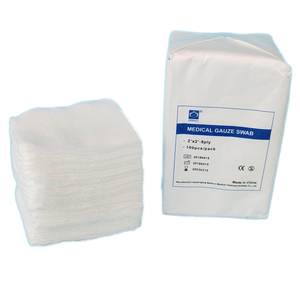
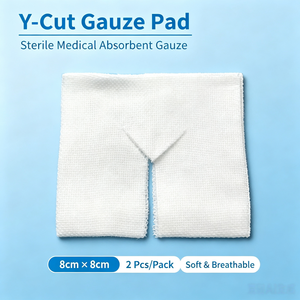
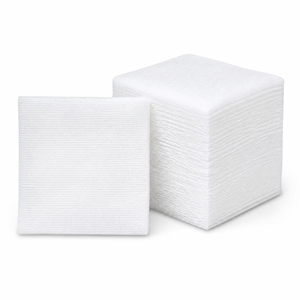
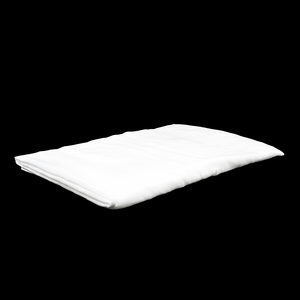
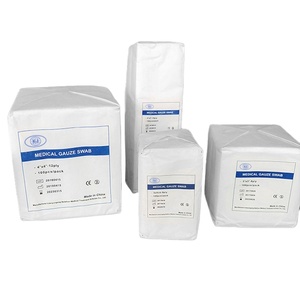
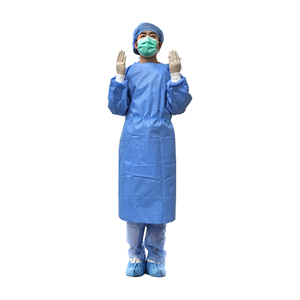
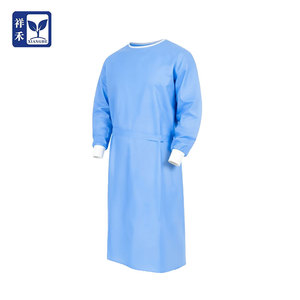
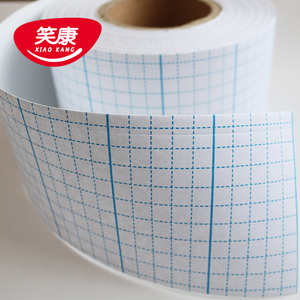
In modern surgical and wound care protocols, medical gauze sponges represent far more than routine wound dressings; they are vital perioperative instruments designed for precise fluid absorption, surgical site retraction, mechanical cleansing, and hemorrhage control. As a leading CE certified gauze sponges manufacturer and exporter, our manufacturing methodology strictly adheres to international pharmacopoeia standards, including USP Type VII, EN 14079, and European Medical Device Regulation (EU MDR 2017/745).
The structural integrity of a gauze sponge relies directly on fiber selection and weaving architecture. We utilize 100% high-grade, long-staple natural cotton fibers that undergo advanced degreasing and hydrogen peroxide bleaching processes. Unlike traditional chlorine bleaching, which risks leaving toxic dioxin residues, hydrogen peroxide processing ensures complete biocompatibility, zero fluorescence, and negligible water-soluble residue levels (less than 0.5%).
Key Technical Insight for Procurement Officers: The absorbency rate of medical gauze is directly governed by fiber hydrophilicity and thread density. Our premium 20-thread/cm² cotton sponges exhibit a liquid absorption sink time of under 5 seconds—far outperforming standard market products (under 10 seconds), absorbing up to 12 times their dry weight in saline and biological fluids.
A primary risk associated with surgical gauze during operative procedures is fiber shedding (linting). Foreign cotton fibers left inside an open surgical cavity can trigger granuloma formation, adhesions, or delayed wound healing. To mitigate this risk, our automated converting lines utilize proprietary mechanical folding technology that tucks all raw edges completely inside the sponge core.
Whether manufacturing standard 8-ply, 12-ply, or heavy-duty 16-ply sponges, every unit maintains clean, fold-sealed perimeter lines. For invasive surgical procedures such as laparotomies or orthopedic interventions, sponges are integrated with radiopaque (X-Ray detectable) monofilament threads containing at least 60% barium sulfate ($BaSO_4$). These barium lines are thermally bonded directly into the cotton weave to ensure non-dislodgement under friction, providing clear visibility under X-ray fluoroscopy and ensuring absolute surgical count compliance.
Selecting the optimal gauze substrate depends on specific clinical settings—from open surgical fields requiring maximum fluid retention to outpatient dental clinics prioritizing soft tissue comfort. Below is our engineering baseline comparison across standard supply offerings:
| Parameter / Material | 100% Pure Woven Cotton | Viscose/Poly Non-Woven Blend | X-Ray Detectable Lap Sponge |
|---|---|---|---|
| Standard Compliance | EN 14079 / USP Type VII | ISO 10993 Biocompatible Standard | EU MDR 2017/745 Class IIa |
| Warp / Weft Density | 13, 17, 20 threads/cm² | 30 gsm - 50 gsm non-woven mesh | 17 or 20 threads/cm² woven |
| Absorbency Rate | < 5 seconds (Sink test) | < 3 seconds (High capillary) | < 5 seconds (Heavy load) |
| Linting & Particle Shedding | Ultra-low (Folded raw edges) | Near Zero (Hydro-entangled) | Ultra-low with sealed blue loop |
| Primary Clinical Setting | General surgery, ward dressing | Dental, outpatient, cosmetic care | Deep abdominal & thoracic OR cases |
| Sterilization Compatibility | EO Gas / Gamma Radiation / Steam | EO Gas / Gamma Radiation | EO Gas / Steam Autoclave |
Since establishing operations in 2002, our manufacturing facility has evolved into an advanced, vertically integrated enterprise dedicated exclusively to infection prevention and medical consumables. Operating across 100,000 Class (ISO Class 8) cleanrooms equipped with automated inline optical inspection systems, we eliminate contamination risks at every stage of converting, folding, and packaging.
Certified under ISO 13485:2016 and holding CE marking under EU MDR 2017/745 (recertified 2024). Batch-level technical documentation, sterility assurance proofs, and bioburden reports accompany every export container.
Internal laboratories execute rigorous batch testing for tensile bursting strength, absorbency capacity, fluorescence, bioburden load (< 100 CFU/g pre-sterilization), and Ethylene Oxide residual levels (< 4mg/g per ISO 10993-7).
Full support for private-label branding, customized pack counts (1pc, 2pcs, 5pcs, 10pcs in peelable blister pouches), and seamless inclusion into specialty Custom Procedure Trays (CPTs) for global healthcare tenders.
As global healthcare procurement shifts toward sustainable sourcing, stringent regulatory compliance, and total cost of ownership (TCO) reduction, medical supply buyers must anticipate major industry transformations impacting the surgical gauze market:
Environmental standards in the European Union and North America are pushing manufacturers toward zero-liquid-discharge (ZLD) bleaching facilities. Future tenders increasingly favor suppliers utilizing closed-loop water treatment systems and totally chlorine-free (TCF) cotton processing to minimize chemical runoff and industrial carbon footprints.
While traditional 100% woven cotton remains the gold standard for intra-operative surgical packing due to its structural resilience, non-woven viscose/polyester blends are expanding rapidly in outpatient and dental applications. Non-woven sponges provide up to 40% higher absorbency per gram while significantly reducing raw material consumption, providing a cost-effective alternative during global cotton market volatility.
To completely eradicate Retained Surgical Items (RSI)—a zero-tolerance medical error—hospitals are migrating from simple radiopaque threads to automated RFID-tagged lap sponges. Intelligent surgical counts allow operating room personnel to scan patient cavities in real-time before wound closure, driving demand for medical suppliers capable of micro-chip encapsulation during converting.
The administrative burden of EU MDR 2017/745 has forced many small-scale manufacturers out of the export market. International distributors are rapidly consolidating vendor bases, preferring established Star Export House manufacturers capable of providing complete technical files, ongoing post-market surveillance (PMS) data, and uncompromised supply continuity.
Answers to critical questions regarding regulatory documentation, custom manufacturing, quality assurance, and global export shipping terms.
Our manufacturing operations are fully certified under ISO 13485:2016 quality management systems. Our medical gauze sponges, sterile swabs, abdominal pads, and surgical drapes carry valid CE marking under the European Medical Device Regulation (EU MDR 2017/745). Additionally, we maintain SFDA, BIS, and ZED Gold approvals. Complete technical files, declarations of conformity, and ISO certificates are available to import partners upon request.
USP Type VII gauze is constructed from 100% woven pure cotton threads, ideal for invasive intra-operative surgical packing where high tensile strength and structural integrity are required. Non-woven sponges are typically engineered from a hydro-entangled blend of viscose and polyester fibers. Non-wovens offer higher absorbency rates and near-zero linting at a lower unit cost, making them ideal for superficial wound care, skin prep, and dental applications.
Yes. As an OEM/ODM manufacturer, we offer complete customization across all specifications: dimensions (e.g., 5x5cm, 7.5x7.5cm, 10x10cm, 10x20cm), construction (8-ply, 12-ply, 16-ply, 24-ply), mesh counts, and folding styles. Sterilization options include Ethylene Oxide (EO) gas or Gamma irradiation, packaged in paper/paper or paper/film peelable pouches with customized branding and local language labelling.
All converting, cutting, and folding processes take place inside controlled Class 100,000 cleanroom environments. Automated folding equipment turns all raw cut edges strictly inward to lock down loose threads. In addition, batch samples undergo rigorous testing in our quality control lab to verify compliance with EN 14079 particulate shedding limits before release.
Products are packed in medical-grade primary sterile pouches, inner box cartons, and heavy-duty moisture-resistant export shipping master cartons. Standard MOQs depend on whether products are sterile (typically 50,000 pcs per spec) or non-sterile bulk (100,000 pcs). Typical production lead time ranges between 20 to 35 days post sample confirmation and LC/TT deposit approval.
Whether submitting hospital tenders, sourcing private-label OEM consumables, or seeking EU MDR compliant supply chain security, our technical sales specialists are ready to provide instant quotes, physical samples, and regulatory support dossiers.
Contact Us