
ISO 13485:2016 · CE Marked under EU MDR 2017/745 · Exporting to 25+ Countries +91 9266125395 [email protected]
Surgeine Healthcare logo
0%

Why Choose CHG Applicators for Global Buyers?

Healthcare-associated infections remain a serious procurement concern worldwide. The World Health Organization’s Global Report on Infection Prevention and Control 2024 estimates that seven in 100 acute-care patients in high-income countries acquire an infection. In low- and middle-income countries, the figure can reach 15 in 100. These numbers give skin antisepsis a practical role, not merely a marketing angle.

CHG Applicators help standardize preparation before procedures. Many clinical protocols reference 2% chlorhexidine gluconate in 70% isopropyl alcohol for appropriate adult central-line care. The CDC’s Guidelines for the Prevention of Intravascular Catheter-Related Infections support this combination when no contraindication exists. A premeasured applicator can reduce handling steps. It can also distribute solution across a defined area, using a consistent sponge or foam head.

Small details matter.

For global buyers, sterile packaging, lot traceability, clear labeling, and reliable delivery are equally important. Products should support local registration requirements and facility protocols. ISO 13485-based quality systems can strengthen supplier evaluation, although certification alone does not prove clinical suitability. Buyers must still review ingredients, contact time, applicator size, packaging integrity, and compatibility with sensitive skin.

The case is strong, but not absolute. CHG is not suitable for every patient or procedure. Allergies, age restrictions, mucosal use, and regional regulations require careful review. A lower unit price may also hide higher waste or training costs. For this reason, CHG Applicators deserve evaluation through clinical evidence, verified manufacturing controls, and real-world workflow testing—not assumptions.
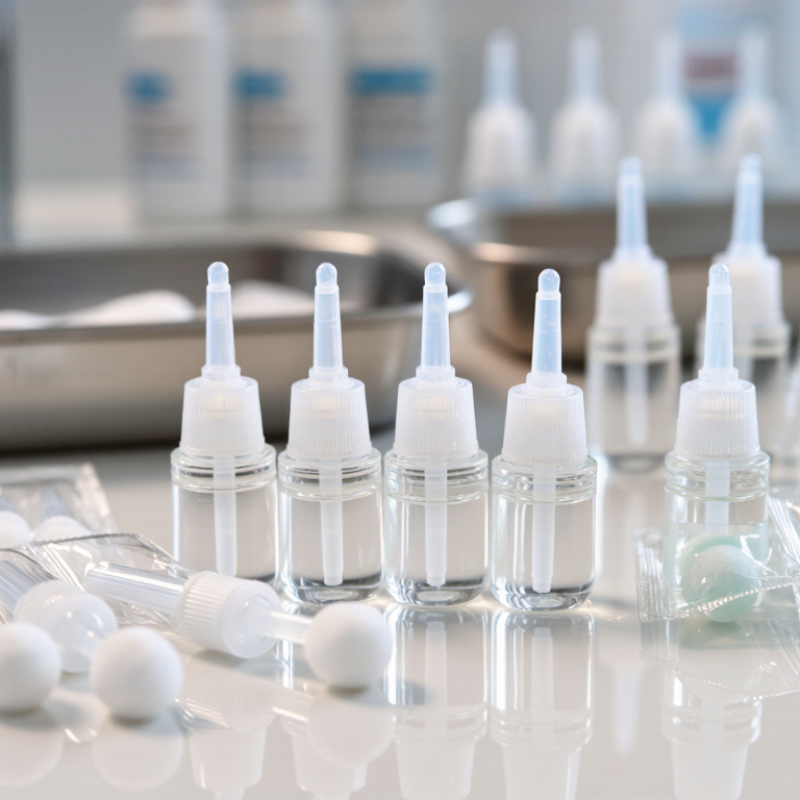
Why Choose CHG Applicators for Global Buyers?

What Are CHG Applicators and How Do They Work?

Why Choose CHG Applicators for Global Buyers?
What Are CHG Applicators and How Do They Work?

CHG applicators are prefilled devices used to prepare skin before selected medical procedures. They usually contain chlorhexidine gluconate, sometimes combined with alcohol. The applicator delivers a measured amount through a sponge, swab, or foam head. This design supports cleaner handling and more consistent coverage than pouring liquid manually. CHG disrupts microbial cell membranes and can remain active on the skin after application. It is not a magic shield. Correct technique still matters.

For global buyers, product details deserve close attention. Review the CHG concentration, applicator size, sterile packaging, shelf life, and storage conditions. Check instructions for use, language requirements, and regulatory documents for each target market. Skin compatibility also matters, especially for infants, damaged skin, sensitive patients, or near the eyes and mucous membranes. Requirements can differ between countries. Assume nothing.

Tips: Match the applicator size to the treatment area. Confirm the package stays sealed and dry. Train users to follow the stated contact and drying time. Never treat speed as the main quality measure. A rushed application may reduce coverage, and that small mistake can affect the whole preparation process. Auditing product feedback can reveal practical issues, such as awkward handles, excessive dripping, or unclear instructions.

Why Global Buyers Use CHG Applicators for Skin Antisepsis

Why Choose CHG Applicators for Global Buyers?

Global buyers use CHG applicators for practical skin antisepsis. These devices deliver chlorhexidine gluconate in a controlled, ready-to-use format. The applicator helps clinicians prepare skin evenly before many invasive procedures. Measured delivery can reduce waste and limit unnecessary handling. That matters in busy operating rooms, clinics, and treatment areas.

Small details matter.

A textured applicator can support consistent contact across the selected skin area. Its design may also help keep the solution away from the user’s hands. In purchasing reviews, teams often examine drying time, package integrity, usability, and storage requirements. They also compare sizes for different patient areas and procedure types. Global supply teams should check local regulations and approved instructions before ordering. Product suitability depends on patient age, skin condition, allergies, and the intended application site. CHG products may not suit every patient or mucosal surface.

The process is not perfect. Rushed preparation can still cause missed areas or premature wiping. Training remains essential, even with a simple applicator. Clear instructions help staff apply adequate friction and allow the solution to dry fully. Buyers should request reliable technical documents, traceability information, and quality records from qualified suppliers. These checks support safer procurement across different healthcare systems.

How CHG Applicators Support Infection Prevention Standards

Why Choose CHG Applicators for Global Buyers?

CHG applicators help standardize skin preparation before invasive procedures. They deliver chlorhexidine gluconate in a measured format. This can reduce variation between clinicians and treatment areas. Consistent coverage matters when infection prevention standards require repeatable practice. Applicators may also support cleaner workflows by limiting direct contact with preparation materials. For global buyers, product selection should include concentration, applicator size, packaging, and intended use. These details affect performance in operating rooms, clinics, and emergency settings. Local regulations and facility protocols must guide every purchasing decision.

Use matters as much as design. Trained staff should inspect the package, apply the solution correctly, and follow the stated drying time. The skin must remain visibly covered. Rushing this step can weaken the intended antiseptic process. Clear instructions for use support staff training and audit records. Documentation also helps infection prevention teams identify gaps. However, no applicator replaces hand hygiene, aseptic technique, or appropriate clinical judgment. That limitation is easy to overlook.

Tips: Match the applicator size to the treatment area. Check expiration dates and package integrity. Confirm compatibility with the procedure and patient population. Store supplies according to labeled conditions. Review local requirements before importing or distributing them. Small checks prevent large inconsistencies. Teams may still need refresher training, especially when products differ in shape or drying time.

What Global Buyers Should Evaluate Before Choosing CHG Applicators

Why Choose CHG Applicators for Global Buyers?

What Global Buyers Should Evaluate Before Choosing CHG Applicators

Global buyers should evaluate CHG applicators beyond their purchase price. The active concentration, solution volume, and applicator size must match the intended clinical procedure. A larger sponge may improve coverage, but it can also increase waste. Small details matter.

Check clinical evidence and product documentation carefully. Look for validated antimicrobial performance, sterility information, shelf-life data, and clear instructions for use. The packaging should show lot numbers, expiration dates, storage conditions, and traceability details. These records support reliable quality checks during receiving and audits.

Regulatory requirements differ between countries and regions. Buyers should confirm the product’s registration status, labeling language, and required technical documents before placing an order. Local healthcare facilities may also request certificates, test reports, or supplier quality records. Compliance should never depend on assumptions.

Practical use deserves equal attention. A secure handle, controlled solution release, and uniform sponge texture can reduce preparation time. Staff should be able to open the package without touching the applicator tip. That sounds simple. It is not always simple in a busy treatment room.

Supply continuity also needs review. Ask about production capacity, minimum order quantities, lead times, and temperature-controlled transport when applicable. A dependable supplier should explain how it handles complaints, recalls, and damaged shipments. A low unit price can mislead if delivery is inconsistent.

No evaluation is perfect. Buyers may overlook user feedback or underestimate storage limits. Trial assessments with qualified healthcare professionals can reveal problems that documents do not show. That practical evidence often changes the final purchasing decision.

Why Choose CHG Applicators for Global Buyers?

What global buyers should evaluate before choosing a chlorhexidine gluconate applicator.

This practical screening model ranks the main decision areas on a five-point scale. Buyers should verify the exact CHG concentration, alcohol content, sterility method, package integrity, applicator coverage, regulatory documentation, and compatibility with local clinical requirements before placing an order.

How to Compare CHG Applicator Suppliers and Supply Capabilities

Why Choose CHG Applicators for Global Buyers?

How to Compare CHG Applicator Suppliers and Supply Capabilities

For global buyers, comparing CHG applicator suppliers starts with clinical fit, not catalog price. The WHO Global Report on Infection Prevention and Control (2022) reported healthcare-associated infections in 7 of 100 acute-care patients in high-income countries. The estimate reached 15 of 100 in low- and middle-income countries. ECDC’s 2022–2023 survey also estimated a 7.1% healthcare-associated infection prevalence in European hospitals. Consistent skin preparation matters.

Start with the applicator itself. Check CHG concentration, alcohol content, solution volume, applicator size, friction design, drying time, and coverage area. CDC guidance recommends an alcohol-based preparation containing more than 0.5% CHG for many central-line procedures, unless contraindicated. The supplier should provide validation data, sterility evidence, lot traceability, shelf-life records, and clear instructions for use. A polished brochure is not proof.

Supply capability needs equal attention. Request historical on-time delivery, minimum order quantities, production capacity, safety-stock policy, and average lead times. Ask how quickly the supplier handles demand spikes or packaging changes. Verify quality systems, regulatory registrations, complaint handling, and change-control procedures. Regional warehouses can shorten delivery, but they do not replace manufacturing resilience. Unit price still matters. It should not dominate the decision. A supplier may pass an audit yet miss a shipment. That risk deserves discussion. WHO and ECDC data support the need for reliable infection-prevention products, but buyers must still challenge incomplete evidence and optimistic forecasts.

Why Choose CHG Applicators for Global Buyers? - How to Compare CHG Applicator Suppliers and Supply Capabilities

A standards-based comparison framework for evaluating product quality, regulatory readiness, manufacturing capability, and international supply reliability.

Evaluation Dimension Relevant Reference or Common Market Practice What a Capable Supplier Should Demonstrate Key Questions for Global Buyers
Active Ingredient Chlorhexidine gluconate (CHG) is commonly used as a broad-spectrum antiseptic active ingredient in preoperative and catheter-site skin preparation products. Controlled raw-material specifications, supplier qualification records, identity testing, assay testing, and impurity control for every relevant lot. Is the CHG source qualified? What assay range, impurity limits, and incoming inspection procedures are defined?
Formulation Options A widely used clinical reference formulation is 2% CHG in 70% isopropyl alcohol; other concentrations, alcohol systems, and aqueous formulations also exist and must be assessed separately. Documented formulation control, validated mixing procedures, compatibility data, stability studies, and clear product-specific instructions for use. Does the formulation match the intended procedure, target market, skin-use requirements, and applicable regulatory pathway?
Applicator Format Common formats include sterile sponge applicators, foam applicators, swab-style applicators, and single-use applicators with integrated activation mechanisms. Consistent applicator geometry, controlled absorbency, reliable fluid release, secure component assembly, and documented usability validation. Can the supplier provide different applicator shapes, tip materials, handle designs, and activation systems without changing process control?
Fill Volume Range Market configurations vary by intended application area; smaller formats are generally used for limited sites, while larger formats are used for broader skin preparation. Accurate filling equipment, in-process weight checks, defined fill-volume tolerances, and batch records demonstrating consistency. What fill volumes are available? What are the minimum and maximum validated volumes and the allowable tolerance?
Sterility Assurance Single-use sterile applicators may use validated sterilization processes such as ethylene oxide, radiation, or another process suitable for the complete device and packaging system. A validated sterilization cycle, defined sterility assurance level, routine monitoring, residual-control testing where applicable, and release documentation. Which sterilization method is used? Is the process validated for the final packaged product and the intended shelf life?
Quality Management System ISO 13485 is the internationally recognized quality-management standard commonly applied to medical-device manufacturing. An active ISO 13485 certificate covering the relevant manufacturing site and product scope, supported by internal audits, CAPA, complaint handling, and change control. Does the certificate cover the actual production site, formulation, filling, assembly, packaging, and sterilization activities?
Risk Management ISO 14971 provides a recognized framework for medical-device risk management throughout the product life cycle. A product-specific risk-management file addressing chemical exposure, flammability, leakage, applicator breakage, packaging failure, misuse, and skin-contact risks. Are foreseeable use errors and transport-related risks included in the risk analysis and validation plan?
Biocompatibility Skin-contact products are typically evaluated using the applicable biological-evaluation principles of the ISO 10993 series. Material declarations, biological-evaluation documentation, extractables or irritation data where appropriate, and traceability for all patient-contacting materials. Have the formulation, sponge or foam, adhesive, packaging contact materials, and sterilization residues been assessed together?
Packaging Integrity Terminally sterilized medical-device packaging is commonly evaluated against ISO 11607 requirements for sterile-barrier systems and packaging processes. Seal-strength testing, burst or dye testing where applicable, package integrity validation, distribution simulation, and aging studies. Can the supplier provide accelerated-aging and real-time-aging evidence, plus transport testing for the intended shipping route?
Shelf Life Shelf life is product-specific and depends on CHG stability, alcohol evaporation control, container closure, packaging barrier properties, and sterilization effects. Stability protocols covering appearance, CHG assay, alcohol content where relevant, leakage, package integrity, sterility, and applicator performance. Is the claimed shelf life supported by real-time data, accelerated data, or both? What storage conditions are required?
Regulatory Documentation Market access requirements vary by destination and may involve medical-device, medicinal-product, biocidal-product, or combination-product rules. Technical files, declarations or registrations applicable to the destination market, product labels, instructions for use, safety data, and change-notification procedures. Can the supplier support country-specific labeling, language requirements, importer information, and post-market obligations?
Batch Traceability Medical-device traceability commonly links raw materials, formulation, filling, assembly, sterilization, packaging, inspection, and release records to a defined lot number. Unique lot identification, electronic or controlled paper records, retention samples, certificate-of-analysis availability, and documented recall procedures. How quickly can the supplier trace a finished lot back to raw materials and forward to shipment destinations?
Production Capacity Capacity should be evaluated using validated output for the specific applicator configuration, not only a factory-wide headline figure. Documented monthly capacity, equipment list, staffing model, preventive-maintenance plan, line-utilization data, and contingency arrangements. What is the normal monthly output, peak output, current utilization, and available backup capacity for the selected specification?
Lead-Time Control Actual lead time depends on raw-material availability, tooling, formulation approval, sterilization scheduling, packaging, testing, and export documentation. Separate timelines for sampling, validation, first production, repeat orders, and urgent replenishment, with clear assumptions and escalation procedures. Which steps determine the longest lead time, and what safety-stock or continuity plan is available for recurring orders?
Customization Capability Customization may include fill volume, applicator size, handle color, packaging artwork, label language, carton configuration, and private-label documentation. Formal design-transfer and change-control processes that prevent customization from weakening validated performance or regulatory compliance. Which changes require new validation, stability testing, regulatory review, or a new product code?
Cost and Total Value Unit price alone does not reflect the total cost of ownership; packaging, sterilization, testing, freight, duties, wastage, and regulatory support can materially affect landed cost. Transparent quotations showing product configuration, test requirements, packaging levels, shipping terms, tooling charges, minimum order quantities, and repeat-order pricing. Are quotations based on identical CHG concentration, fill volume, sterility method, packaging, delivery terms, and documentation scope?

Buyer Note: Product specifications, regulatory classification, clinical indications, sterilization method, shelf life, and performance claims must be verified against the supplier’s current technical documentation and the requirements of the destination market.

FAQS

Why do healthcare buyers choose CHG applicators for skin antisepsis?

They provide measured chlorhexidine gluconate in a ready-to-use format. This can support even skin preparation before many invasive procedures. Small details matter.

What features should buyers compare between CHG applicators?

Review CHG concentration, alcohol content, solution volume, applicator size, and coverage area. Also examine friction design, drying time, package integrity, and storage needs. A polished brochure is not proof.

How can an applicator improve preparation consistency?

Its textured surface may support steady contact across the selected skin area. The design can also help keep liquid away from the user’s hands. Results may still vary.

What technical documents should suppliers provide?

Request validation data, sterility evidence, lot traceability, shelf-life records, and clear usage instructions. Quality records should match the supplied product and production lot. Do not rely on promises alone.

How should buyers assess a supplier’s delivery capability?

Ask for historical on-time delivery, minimum order quantities, production capacity, and average lead times. Check safety-stock policies and responses to sudden demand increases. One missed shipment matters.

Does the lowest unit price indicate the best supplier?

Not necessarily. A lower price may hide longer lead times, weak documentation, or limited production resilience. Compare total supply risk, not only the invoice amount.

Which patient and procedure factors require attention?

Suitability depends on patient age, skin condition, allergies, and the intended application site. Some CHG products may not suit every patient or mucosal surface. Local instructions and regulations must guide the decision.

Why does staff training remain necessary with simple applicators?

Rushed preparation can leave missed areas or cause premature wiping. Staff should use adequate friction and allow the solution to dry fully. Simple tools still need careful handling.

How can global buyers manage regulatory and quality differences?

Verify local registrations, approved instructions, complaint handling, and change-control procedures before ordering. Regional warehouses may shorten delivery, but they cannot replace reliable manufacturing. The process is imperfect.

Conclusion

CHG Applicators are pre-dosed skin antisepsis tools that apply chlorhexidine gluconate to a defined area in a controlled and convenient manner. Their design can help simplify preparation, support consistent coverage, reduce handling steps, and improve workflow efficiency in healthcare settings. For global buyers, these benefits are especially valuable when standardizing infection prevention practices across different facilities, departments, or regions. By helping users follow clear application procedures, CHG Applicators can contribute to more consistent skin preparation and support established clinical protocols.

Before choosing a product, buyers should evaluate applicator size, solution concentration, packaging, ease of use, drying time, material compatibility, sterilization or cleanliness requirements, labeling, documentation, and suitability for intended patient populations. Supplier assessment is equally important: review manufacturing capacity, quality systems, product consistency, regulatory documentation, customization options, lead times, logistics support, and continuity of supply. A reliable purchasing decision should balance clinical practicality, product quality, compliance needs, total cost, and the supplier’s ability to support stable delivery in international markets.

Amelia

Amelia

Amelia is a professional marketing specialist dedicated to helping businesses understand products, markets, and customer needs through clear, practical, and insightful communication. With extensive knowledge of the company’s products and services, she regularly contributes expert articles to the......