
ISO 13485:2016 · CE Marked under EU MDR 2017/745 · Exporting to 25+ Countries +91 9266125395 [email protected]
Surgeine Healthcare logo
0%

CHG Swab Sticks are drawing attention because healthcare teams need practical ways to prepare skin before certain procedures. Their ready-to-use format and chlorhexidine gluconate solution can support consistent application when used according to product instructions and clinical protocols. In a busy clinic, a premeasured applicator may reduce setup steps and simplify routine preparation. Small details matter. Many products are individually packaged, but sterility, solution strength, and applicator design vary by manufacturer. Buyers should check labeling rather than assume every stick is identical.

Demand also reflects growing attention to infection-prevention practices and the need for dependable supplies across hospitals, outpatient centers, and other care settings. Staff may value applicators that are easy to store, handle, and include in established workflows. Yet convenience alone is not enough. CHG products may not suit every patient or every use, so clinicians should follow applicable guidance and consider product warnings, including sensitivities. Procurement teams also weigh availability, packaging, cost, and staff familiarity. Those factors can change from one facility to another. The demand is real, but it should not be treated as proof that one format fits all. A closer look at product specifications and clinical needs explains why these compact applicators remain a frequent choice—and where careful judgment still matters.
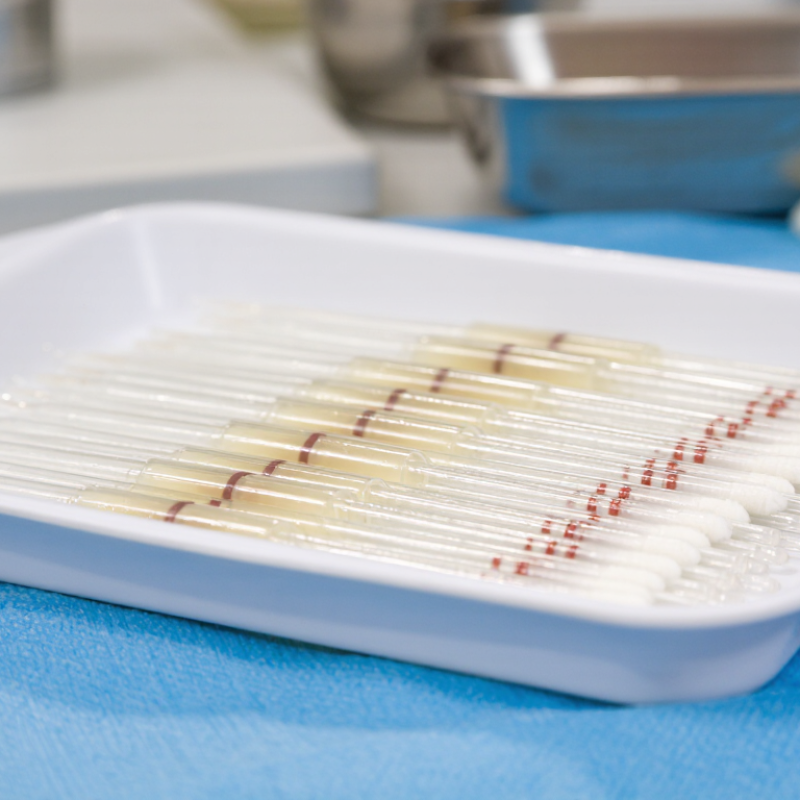
Why Are CHG Swab Sticks in High Demand?

What CHG Swab Sticks Contain: Common 2% CHG/70% IPA Formulations

Why Are CHG Swab Sticks in High Demand?
What CHG Swab Sticks Contain: Common 2% CHG/70% IPA Formulations

A common formulation combines 2% chlorhexidine gluconate (CHG) with 70% isopropyl alcohol (IPA). IPA acts quickly on many microorganisms, while CHG can provide continued antimicrobial activity on the skin. Together, they are used for skin antisepsis before certain procedures. The swab stick helps apply the solution to a targeted area, but it does not replace proper skin preparation or hand hygiene.

Clinical guidance supports the wider use of alcohol-based CHG. The CDC’s 2017 catheter-related infection guideline recommends preparations containing more than 0.5% CHG in alcohol for central-line skin antisepsis. In a 2015 JAMA randomized trial, Mimoz and colleagues reported fewer catheter-related infections with 2% CHG/70% IPA than with an alcohol-based povidone-iodine preparation. These findings concern specific clinical settings; they do not mean every formulation suits every patient or procedure. Check the product’s instructions, since concentration, applicator design, and approved use can vary.

Tips: Apply the solution evenly, use the stated contact time, and let the skin dry completely. Small details matter. If irritation occurs, stop and seek clinical guidance.

Why Antisepsis Matters: WHO Estimates 7 in 100 Patients Acquire HAIs in High-Income Care

Why Are CHG Swab Sticks in High Demand?

The World Health Organization estimates that about 7 in 100 patients in high-income countries acquire a healthcare-associated infection during care. This figure describes a real risk, not a prediction for every patient or hospital. Even a brief infection can mean extra treatment, a longer stay, and added strain for patients and care teams.

That is not small. Preventing infections depends on many steps, including hand hygiene, clean equipment, and appropriate skin antisepsis. CHG, or chlorhexidine gluconate, is used in some swab sticks to reduce microorganisms on the skin before selected procedures. A single-use stick can offer a ready-to-use format at the bedside, helping staff apply antiseptic to a defined area without pouring from a shared container.

But a swab is not a shield. It cannot prevent every infection, and CHG is not suitable for every patient or procedure. Staff should follow local protocols and product instructions, check for known sensitivities, and allow the skin to dry as directed. These details can be easy to rush when a ward is busy. That is precisely why clear routines matter: reliable antisepsis is one part of infection prevention, alongside careful technique and ongoing attention to patient safety.

Why Are CHG Swab Sticks in High Demand?

Why antisepsis matters: healthcare-associated infections affect patients worldwide.

WHO estimates that about 7 in 100 patients in acute-care hospitals in high-income countries acquire at least one healthcare-associated infection; in low- and middle-income countries, the estimate is about 15 in 100. Antisepsis is one part of infection prevention. Chlorhexidine gluconate (CHG) is an antiseptic used in some clinical skin-preparation practices.

Source: World Health Organization, Global report on infection prevention and control (2022).

What CDC Guidelines Recommend: >0.5% CHG in Alcohol for Central-Line Skin Prep

Why Are CHG Swab Sticks in High Demand?

For central-line skin preparation, the concentration matters. CDC guidance recommends a chlorhexidine gluconate (CHG) preparation containing more than 0.5% CHG in alcohol before catheter insertion. This recommendation also applies during dressing changes. A premoistened swab stick can make application convenient at the bedside, but convenience does not replace correct technique or local clinical protocols.

Tips: Check the product label and confirm the CHG concentration. Apply the antiseptic using the recommended friction and contact time. Let the area dry completely before proceeding. Do not wipe it away or speed drying by fanning. Small details matter. If a patient has a known CHG sensitivity or another contraindication, follow clinical guidance for an alternative.

Alcohol-based antiseptics need careful handling, especially around eyes, mucous membranes, and sources of ignition. Staff should use the product only on appropriate skin and follow its instructions. The recommendation is useful, but it is not a substitute for assessment: skin condition, patient factors, and facility protocols still matter. In practice, consistency helps; occasional uncertainty about technique is a reason to review training, not guess.

Where Demand Grows: An Estimated 313 Million Operations Worldwide in 2012

Why Are CHG Swab Sticks in High Demand?

An estimated 313 million operations took place worldwide in 2012. That figure helps explain the scale of surgical preparation, but it needs careful reading. It is a historical estimate, not a count of CHG swabs used. Definitions of an operation, reporting systems, and regional coverage can all affect the total.

Before many procedures, clinical teams prepare the skin to reduce surface microorganisms. Chlorhexidine gluconate, often shortened to CHG, is one antiseptic used in some settings. A single-use swab stick can offer a measured, portable format for applying solution to a defined area. Think of a prepared tray, a sealed applicator, and a marked skin site. Small practical details matter when teams repeat preparation across busy operating schedules.

The link between procedure volume and CHG demand is real, but not exact. Not every operation uses CHG, and protocols differ by procedure, patient, and facility. Some settings may use other antiseptics or application formats. The 2012 estimate also cannot describe today’s surgical volume on its own. It is still a useful scale marker. A large number of procedures means many opportunities for skin preparation, while local clinical guidance determines what product is appropriate. Even a clean-looking count has limits.

What Shapes Adoption: Procedure Volume, Single-Use Workflows, and Skin-Prep Protocols

Demand for CHG swab sticks often follows procedure volume. More line insertions, dressing changes, and other skin-preparation tasks can mean more frequent supply turnover. In a busy treatment area, staff may value a ready-to-use applicator that is easy to store and handle. Small details matter.

Single-use workflows also influence adoption. An individually packaged stick can support a clear, one-patient process and reduce the need to manage reusable application tools. Staff still need to follow the product’s directions, including how much solution to apply and how long to let the skin dry. A faster-looking workflow is not automatically a safer one.

Local skin-prep protocols shape purchasing decisions, too. Facilities may specify CHG for particular procedures, while patient factors and clinical guidance can affect whether it is appropriate. Training matters: hurried application, missed areas, or insufficient drying can undermine the intended process. Procedure counts and supply records can help teams forecast demand, but they do not explain every variation. That part deserves a closer look. A sudden increase may reflect protocol changes, not just rising procedure volume.

Why Are CHG Swab Sticks in High Demand? — What Shapes Adoption: Procedure Volume, Single-Use Workflows, and Skin-Prep Protocols
Adoption factor Evidence-based data or protocol How it can shape adoption Practical planning measure Reference
Procedure volume A Lancet Commission report estimated that approximately 313 million surgical procedures were performed worldwide in 2012. This is a measure of surgical activity, not CHG swab-stick use. High volumes of eligible skin-prep procedures can create recurring demand for prep supplies. Actual CHG use depends on local protocols and the procedure. Estimate demand from local eligible procedures × applicators specified by the facility’s protocol and product instructions. Meara et al., The Lancet, 2015
Central-line insertion protocols CDC guidance recommends an alcoholic chlorhexidine solution with a concentration greater than 0.5% for skin antisepsis before central venous catheter insertion and during dressing changes. The antiseptic should be allowed to dry according to guidance and product instructions. Facilities following CHG-based catheter-prep protocols may include suitable CHG applicators in their standard procedure supplies. Track catheter insertions where CHG is indicated, while accounting for patient-specific contraindications and the approved product instructions. CDC, Guidelines for the Prevention of Intravascular Catheter-Related Infections, 2011
Surgical skin-prep protocols WHO recommends an alcohol-based antiseptic solution containing CHG for surgical-site skin preparation, unless contraindicated. The choice must be appropriate for the patient and procedure. Where local surgical protocols specify CHG, ready-to-use applicators may fit established preparation workflows. Review the facility’s surgical-prep policy, approved formulations, application area, and drying requirements. WHO, Global Guidelines for the Prevention of Surgical Site Infection, 2nd edition, 2018
Single-use workflows A single-use applicator is intended for one use and should be discarded afterward, in accordance with its labeling and facility policy. Individual-use packaging can support standardized point-of-care preparation and reduce reliance on shared or refillable application tools. It does not, by itself, guarantee prevention of infection. Set par levels using procedure schedules, approved applicator quantities per procedure, and inventory waste or expiry data. CDC catheter-infection prevention guidance; applicable product labeling and facility policy
Workflow standardization Application method, antiseptic concentration, coverage, contact time, and drying requirements are product- and protocol-dependent. Staff should follow the relevant instructions rather than assume that all applicators are interchangeable. A clearly defined prep workflow can make training, supply selection, and replenishment more consistent across eligible procedures. Compare the approved protocol with applicator labeling, staff training materials, and procedure-kit contents. CDC guidance and applicable antiseptic product instructions
Patient safety and contraindications The FDA has warned that chlorhexidine can rarely cause serious allergic reactions. Use should be avoided in patients with a known CHG allergy, and alternatives should be considered when CHG is contraindicated. Screening and access to appropriate alternatives are necessary parts of any CHG-based prep program and affect how broadly it can be used. Include allergy checks and an approved alternative antiseptic in the procedure workflow. U.S. FDA, Drug Safety Communication on rare but serious allergic reactions with chlorhexidine gluconate, 2017

Note: Procedure-volume figures provide context only; they are not estimates of CHG swab-stick sales or market size. Applicator requirements vary by procedure, protocol, and product instructions.

FAQS

What is commonly found in a CHG swab stick?

A common formulation contains 2% chlorhexidine gluconate and 70% isopropyl alcohol. Formulations can vary.

What do the two ingredients do?

Isopropyl alcohol acts quickly against many microorganisms. CHG may provide continued antimicrobial activity on the skin.

When are these swab sticks used?

They are used for skin antisepsis before selected procedures. They do not replace hand hygiene or other skin-preparation steps.

How should the solution be applied?

Apply it evenly to the intended area. Follow the product’s contact-time instructions, then let the skin dry completely. Small details matter.

Are CHG swab sticks suitable for everyone?

No. Patient sensitivities and procedure requirements can affect whether CHG is appropriate. Check instructions and follow local clinical guidance.

Can a swab stick prevent every healthcare-associated infection?

No. It is one part of infection prevention, alongside clean equipment, hand hygiene, and careful technique. A swab is not a shield.

Why might a care facility use single-use applicators?

Individually packaged sticks can support a one-patient workflow and provide a ready-to-use applicator. They still require correct application and drying time.

What can influence how many swab sticks a facility needs?

Procedure volume, skin-preparation protocols, and changes in clinical practice can affect supply needs. Usage records help, but they may not explain every change.

Conclusion

CHG Swab Sticks are widely used for skin antisepsis, often containing a 2% chlorhexidine gluconate (CHG) and 70% isopropyl alcohol (IPA) formulation. Their use reflects the importance of reducing infection risks in healthcare: the World Health Organization estimates that 7 in 100 patients in high-income countries acquire a healthcare-associated infection. For central-line skin preparation, CDC guidance recommends an alcohol-based solution containing more than 0.5% CHG.

Demand is also shaped by the scale and routine needs of medical procedures. An estimated 313 million operations took place worldwide in 2012, creating a substantial need for reliable skin-preparation supplies. Single-use workflows, procedure volumes, and established antisepsis protocols all influence adoption. Together, these factors help explain why convenient, ready-to-use CHG Swab Sticks remain an important option for clinical skin preparation.

Charlotte

Charlotte

Charlotte is a professional marketing specialist dedicated to helping businesses understand products, markets, and customer needs through clear, practical, and insightful communication. With a strong understanding of the company’s products, services, and industry applications, she transforms......