
Disinfectant Caps may look like minor components, but a poor fit can slow filling, cause leakage, or frustrate users. Global buyers need to compare more than unit price. Neck finish, closure compatibility, material, dosing style, seal performance, and packaging dimensions all matter. A cap that works on one bottle may not fit another. Measure the bottle finish and test samples with the actual product before placing a large order.
No verifiable expert quotation was provided, so the following is original editorial guidance, not a real person’s quote: “A cap is only reliable when it fits the bottle, the formula, and the way people use it.” Small details matter. Check whether the cap opens easily with damp hands, dispenses consistently, and stays secure during transport. Ask suppliers for relevant material and compatibility information, and confirm what their testing covers. Then review lead times, minimum order quantities, customization options, and sample approval procedures. These checks help buyers compare offers on practical evidence, not polished photos alone.
There are trade-offs. A lower-cost closure may meet immediate needs but require closer testing or more careful handling. Even a convincing sample cannot answer every production question. The seven buying tips ahead offer a clear framework for evaluating Disinfectant Caps, asking suppliers useful questions, and documenting decisions before committing to volume. A little hesitation is healthy. It can prevent expensive surprises.
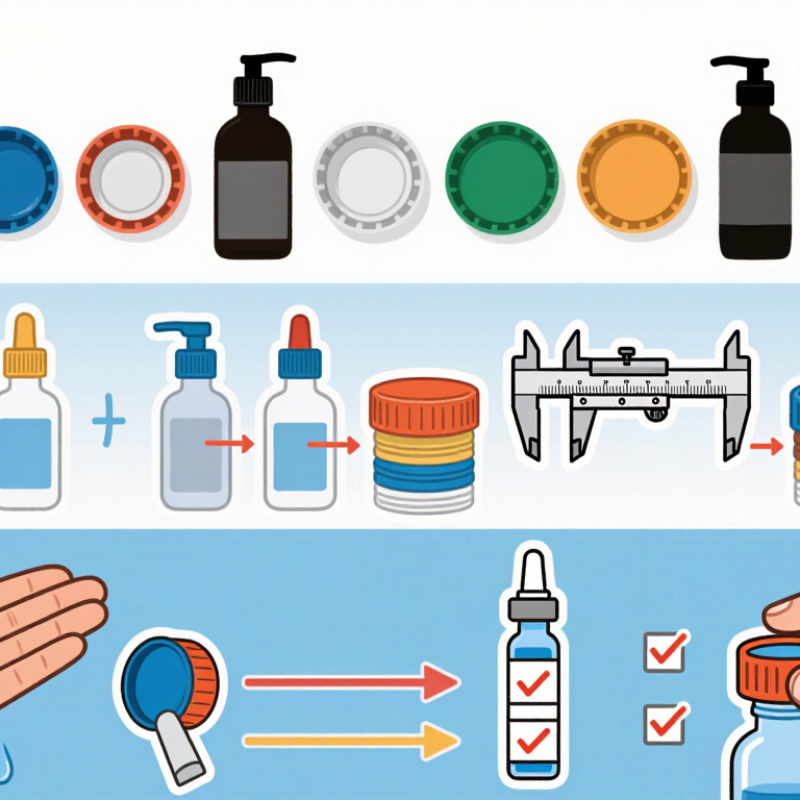
Disinfectant caps vary by connector design and intended use. Many contain an alcohol-based material and fit over needleless connectors on IV access devices. They help keep the connector covered between uses. Other caps may be designed for different connector shapes or use a different validated disinfectant. Check the product’s stated application, not just its appearance.
Fit matters. A cap should attach securely without forcing or damaging the connector. Compare its compatibility information with the connectors used at your facility. Also check whether it is single-use and how long it must remain in place, following the manufacturer’s instructions. Small details matter. A loose cap may fall off during handling, while a cap that is difficult to remove can slow routine work.
For global purchasing, review clear labeling, material details, packaging integrity, and the supplier’s quality documentation. Confirm that instructions are available in languages your staff can understand. A bright color helps, but it proves nothing about performance. Ask for evidence that the cap was tested for its stated use. One easy mistake is assuming every disinfectant cap fits every connector; that assumption can be wrong, even when the caps look nearly identical.
| Buying Tip | Cap Type or Format | Intended Use | What to Check Before Buying |
|---|---|---|---|
| 1. Match the cap to the connector | Disinfecting cap for a needleless connector | Fits over a compatible needleless IV connector to disinfect its access surface between uses, as directed by the product instructions. | Confirm the connector type and dimensions listed in the cap’s compatibility information. Do not assume that a cap fits every connector. |
| 2. Check the disinfectant ingredient | Pre-saturated cap, commonly containing 70% isopropyl alcohol | Provides disinfectant at the connector surface during the specified contact period. | Review the active ingredient, concentration, material compatibility, and any facility restrictions. Formulations vary by product. |
| 3. Confirm whether the cap is single-use | Single-use disinfecting cap | Applied for the use and duration specified by its manufacturer; many products are designed to be discarded after removal. | Check the label and instructions for use (IFU) for reuse, replacement, and disposal requirements. Do not reuse unless the IFU explicitly permits it. |
| 4. Verify the intended connector access point | Cap designed for a specific needleless connector or access valve | Used on the external access surface of a compatible connector; it is not a general-purpose cap for every tubing end or medical device. | Check the manufacturer’s compatibility list and the connector’s instructions. A disinfecting cap does not replace other required aseptic procedures. |
| 5. Follow the contact-time instructions | Passive disinfection cap | Remains in place for the product-specified period so the disinfectant can act on the covered surface. | Compare the IFU’s application and contact-time directions with your clinical workflow. Do not infer a contact time from another product. |
| 6. Assess packaging and supply needs | Individually packaged cap or multipack | Supports stocking and point-of-care access; individual packaging can help keep each cap protected until use. | Review package quantity, storage conditions, expiry dating, lot traceability, and the product’s labeling in the destination market. |
| 7. Confirm regulatory and quality documentation | Product-specific disinfecting cap | Used only for the indication and in the manner stated in its approved labeling or IFU. | Request applicable regulatory status, quality documentation, labeling, and IFU for the intended country or region. Requirements differ by market. |
Important: Disinfectant caps are not interchangeable. Always follow the cap and connector manufacturers’ instructions, facility protocols, and applicable local requirements.
Test it on production bottles, not only drawings. Check thread fit, seal compression, and leakage. A tiny mismatch can matter.
Polypropylene and polyethylene are common options. Compatibility depends on the exact liquid, concentration, temperature, and storage time. Request written data, then test samples.
Fill samples with the intended disinfectant. Check for leaks, swelling, discoloration, and changes in closure torque. Test upright and inverted.
Not always. Confirm cap height, feed orientation, application torque, and tamper-evident features. Run a short trial at normal production speed.
Inspect samples after storage, not just on day one. Record the liquid, temperature, torque, and test duration. Retest after several weeks.
Ask for material declarations, chemical-resistance test results, dimensional tolerances, and batch traceability. A general quality certificate may not cover the finished cap.
Make sure the change solves a real use problem, such as color coding or dispensing. Request samples before tooling, and clarify mold ownership and modification charges.
Compare usable units, setup fees, rejected parts, carton quantities, and replenishment lead times. A low minimum may raise unit costs. Test the trade-off.
Choosing the right Disinfectant Caps starts with understanding the available types and the purpose each is designed to serve. Buyers should check that a cap fits the bottle securely, works with the intended chemical formulation, and can be handled by the packaging line. Material selection matters too: consider durability, chemical resistance, user safety, and consistent product quality. Reviewing relevant safety and quality documentation can help clarify whether a product meets the needs of its intended application.
Before placing an order, compare suppliers based on product consistency, communication, customization options, and minimum order quantities. Request clear details about pricing, production lead times, shipping arrangements, and any import requirements for the destination market. A careful review of these factors can help global buyers balance cost, compatibility, and dependable delivery when sourcing Disinfectant Caps.