
ISO 13485:2016 · CE Marked under EU MDR 2017/745 · Exporting to 25+ Countries +91 9266125395 [email protected]
Surgeine Healthcare logo
0%

Choosing Medical Equipment Covers in 2026 requires more than comparing prices or fabric samples. A cover must fit the device, support cleaning routines, and protect sensitive surfaces without blocking vents, controls, cables, or warning labels. In a busy ICU, a loose cover can catch on a trolley wheel. A sealed seam can trap moisture. Small details matter.

The World Health Organization’s Global Report on Infection Prevention and Control (2022) estimates that 7 in 100 acute-care patients in high-income countries acquire at least one healthcare-associated infection. In low- and middle-income countries, the estimate reaches 15 in 100. Covers cannot eliminate this risk. They can, however, support cleaner workflows when selected and maintained properly. The CDC’s Guideline for Disinfection and Sterilization also stresses that equipment surfaces and reusable devices require suitable cleaning, disinfection, or sterilization procedures.

William A. Rutala, PhD, MPH, a recognized infection-prevention specialist, stated, “Disinfection and sterilization are essential for ensuring that medical and surgical instruments do not transmit infectious pathogens to patients.” His point remains practical in 2026. Medical Equipment Covers should complement those procedures, not replace them. Look for verified fluid resistance, breathable construction, secure closures, and compatibility with approved disinfectants. Reusable covers may reduce waste, but only when facilities can wash, inspect, and replace them consistently. Disposable covers may simplify turnover, yet they can increase purchasing volume and storage pressure. There is no perfect option. The right choice depends on the device, department, cleaning cycle, and real-world staff behavior.
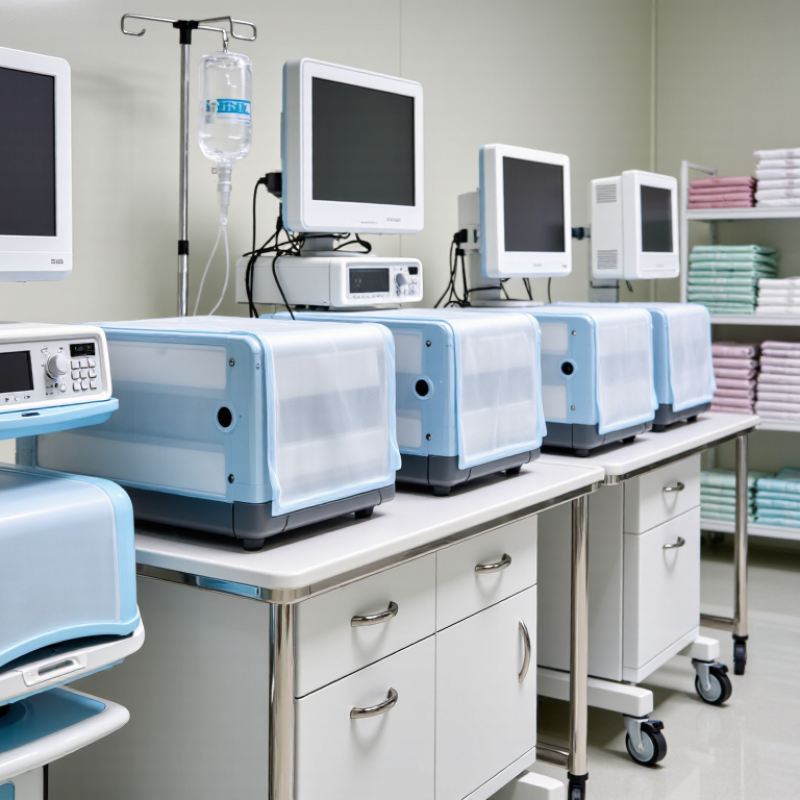
How to Choose Medical Equipment Covers in 2026?

Define Fluid Risk with AAMI PB70 Levels 1–4 and 20–80 cm H₂O

Fluid risk should guide medical equipment cover selection, not appearance alone. AAMI PB70 Levels 1–4 classify protective gowns by liquid barrier performance. Level 1 suits minimal exposure, such as routine care with limited fluid. Level 2 addresses light splashes and greater contact. Level 3 supports higher fluid pressure, including irrigation or blood exposure. Level 4 requires resistance to blood and viral penetration testing.

Pressure matters. AAMI testing commonly begins at 20 cm H₂O, while stronger barriers may withstand 50 cm H₂O or more. An 80 cm H₂O target can support a demanding internal specification, but it should not be described as an official AAMI Level 4 requirement. Level 4 depends on penetration testing, not hydrostatic pressure alone. Check seams, closures, cuffs, and equipment edges. Fluid often collects there.

The WHO Global Report on Infection Prevention and Control reports healthcare-associated infections in roughly 7 of 100 acute-care patients in high-income settings, and 15 of 100 in low- and middle-income settings. The ECDC’s 2022–2023 point-prevalence survey estimated that 7.1% of European acute-care patients had at least one healthcare-associated infection. These figures do not prove that covers prevent infection. They do show why risk assessment deserves attention. In practice, a cover can pass a material test yet fail after folding, stretching, or repeated handling. I would reassess the selected level after observing real procedures. A dry surface can still hide a wet seam.

Select Cover Materials Tested by ASTM F1671 and ISO 10993

How to Choose Medical Equipment Covers in 2026?

Medical equipment covers should protect devices without creating a new safety concern. ASTM F1671 testing helps assess resistance to penetration by blood-borne pathogens through protective materials. It uses a bacteriophage challenge under controlled pressure. This is more meaningful than simply choosing a thick or waterproof-looking fabric.

Ask for the complete test report, not only a supplier statement. Check the tested material, thickness, seams, closures, and production lot. A fabric may pass testing while a stitched cover leaks at its weakest point. Inspectors should also review whether the test method matches the intended use. A cover for brief contact needs different evidence from one used during prolonged fluid exposure.

ISO 10993 adds another essential question: how will the material interact with the body? The relevant biological evaluation depends on contact type, contact duration, and possible skin or mucosal exposure. Do not treat ISO 10993 as a universal approval label. Review cytotoxicity, sensitization, irritation, and chemical characterization data when appropriate. Small details matter, including dyes, coatings, elastic edges, and residues after manufacturing.

Practical checks help.

Place sample covers around equipment with sharp corners and moving parts. Examine stretching, tearing, condensation, and cleaning damage. Some materials feel durable but become brittle after repeated disinfection. Others remain flexible yet shed surface fibers. That contradiction deserves attention. Selection decisions should connect ASTM F1671 evidence, ISO 10993 evaluation, device geometry, cleaning procedures, and documented quality controls. A certificate alone is not enough.

How to Choose Medical Equipment Covers in 2026?

Select cover materials by matching the test evidence to the intended use. ASTM F1671/F1671M evaluates resistance to penetration by blood-borne pathogens, while the ISO 10993 series addresses biological safety endpoints such as cytotoxicity, sensitization, and irritation.

The chart uses a binary scope indicator: 1 means the standard directly addresses the evaluation area; 0 means it is not the primary purpose of that standard. Actual testing should be selected according to the cover’s material, patient contact, duration of contact, and intended use.

Verify Fit, Seams, and Suppliers Under FDA QMSR and ISO 13485

How to Choose Medical Equipment Covers in 2026?

Under the FDA’s Quality Management System Regulation (QMSR), effective February 2, 2026, suppliers should align quality controls with ISO 13485:2016. The FDA’s FY2023 medical device recall report recorded more than 1,000 recalls. Covers are not always the root cause, but poor fit can obstruct controls, vents, labels, or emergency access. Measure the equipment in use, including cables, handles, wheels, and movement clearance. A cover that fits on paper may fail beside a bed.

Seams deserve documented testing. Request seam strength results, dimensional tolerances, material specifications, and lot traceability. Ask how nonconforming covers are segregated and corrected. The ISO Survey 2023 reported more than 30,000 ISO 13485 certificates worldwide, but certification alone proves limited capability. Audit the supplier’s design records, change-control process, complaint handling, and inspection records. A supplier can pass an audit and still miss a tight corner radius. That weakness is easy to overlook.

Tips: Use a transparent fit sample before approving production. Mark access points with removable labels. Check the cover after repeated cleaning, folding, and equipment movement. Photograph failures. Keep acceptance criteria measurable, not simply “good fit.” Also verify whether the supplier’s quality scope includes the actual cover design and manufacturing site. No checklist catches every failure, so review field feedback after installation.

Check Cleanroom Compatibility: ISO Class 5 Allows 3,520 Particles/m³

When choosing medical equipment covers in 2026, cleanroom compatibility should come before color, price, or appearance. ISO 14644-1:2015 defines ISO Class 5 as a maximum of 3,520 particles per cubic meter at ≥0.5 micrometers. This limit is strict, not decorative. A cover can look spotless and still release fibers around a sterile workstation.

Select low-lint, non-shedding materials with sealed edges and smooth surfaces. Check whether the cover has documented particle-shedding results, chemical resistance, and compatibility with disinfectants used onsite. The FDA’s guidance on sterile drug manufacturing identifies ISO Class 5 environments for critical exposure zones, reinforcing the need for controlled materials near open sterile processes. EU GMP Annex 1 also requires validated contamination-control strategies, not casual visual checks.

Fit matters more than many buyers expect. Loose fabric can brush against equipment, while tight seams may tear during installation. Measure corners, cables, handles, and ventilation openings. Ask for test conditions, sampling methods, and sterilization limits. Vague claims are warning signs.

Do not assume “cleanroom compatible” means ISO 5 approved. It may only describe packaging or final cleaning. This is where selection becomes imperfect: available data may not match your exact airflow, wiping routine, or equipment shape. A trial installation, particle monitoring, and documented inspection provide stronger evidence than a product label alone.

Compare Lifecycle Cost Across 10, 50, and 100 Cleaning Cycles

How to Choose Medical Equipment Covers in 2026?

A low purchase price does not guarantee a low lifecycle cost. In equipment audits, I compare cover price, cleaning labor, drying time, damage, and replacement frequency.

A cover costing $18 may reach $30 after 10 cleaning cycles. At 50 cycles, seam repairs and staff handling can raise the cost to $52. At 100 cycles, replacement may be cheaper than continued maintenance.

These figures are examples, not promises. Cleaning chemistry, water temperature, and drying methods change the result. Always check the manufacturer’s care instructions and your facility’s infection-control requirements.

Tips: Record every cleaning cycle. Weigh staff time. Inspect seams, fasteners, and fluid resistance after each tenth cycle. A simple spreadsheet helps, although mine once missed drying labor. That mistake changed the final comparison.

For a reliable decision, test a small sample through 10, 50, and 100 cycles before placing a large order. Photograph surface wear under consistent lighting. Note shrinking, discoloration, stiffness, and difficult fitting around cables or control panels. A cover that takes two minutes to install can cost more than expected across a busy ward. Include disposal and storage space in the calculation. Technical teams should review the results with nursing and environmental-services staff. Their practical observations often reveal problems that laboratory checks miss. Do not choose the longest claimed service life without evidence from your actual cleaning process.

FAQS

What do Levels 1–4 indicate for protective gowns?

They indicate increasing resistance to liquid exposure. Level 1 suits routine care with minimal fluid. Level 4 includes blood and viral penetration testing.

How does pressure testing affect cover selection?

Pressure testing shows how a barrier handles liquid force. Testing may begin near 20 cm H₂O and exceed 50 cm H₂O. An 80 cm H₂O target can support demanding internal specifications. It does not define Level 4 alone.

Which areas of a cover need close inspection?

Inspect seams, cuffs, closures, edges, and ventilation openings. Fluid often gathers there. A dry outer surface can hide a wet seam.

How should equipment covers be measured?

Measure the equipment during actual use. Include cables, handles, wheels, controls, and movement clearance. A paper measurement may miss a tight corner.

What supplier records should buyers request?

Request seam-strength results, material specifications, dimensional tolerances, and lot traceability. Review complaint handling and change-control records. Certification helps, but it proves limited capability.

How can a cover be tested before production approval?

Use a transparent fit sample first. Mark access points with removable labels. Move the equipment repeatedly. Clean, fold, and reinstall the cover. Photograph failures.

What does cleanroom Class 5 compatibility require?

It requires strict particle control. The limit is 3,520 particles per cubic meter at 0.5 micrometers or larger. Select low-lint materials with sealed edges and smooth surfaces.

Does “cleanroom compatible” prove suitability for Class 5 areas?

No. The phrase may only describe packaging or final cleaning. Ask for particle-shedding data, disinfectant compatibility, test conditions, and sterilization limits. The label is incomplete.

Why should covers be checked after installation?

Folding, stretching, cleaning, and movement can change performance. Observe real procedures and review field feedback. No checklist catches every failure. Reassessment is necessary.

Conclusion

Choosing Medical Equipment Covers in 2026 requires a structured evaluation of protection, material safety, compliance, and long-term value. Start by defining fluid exposure risks with AAMI PB70 Levels 1–4 and considering pressure conditions from 20 to 80 cm H₂O. Select cover materials supported by ASTM F1671 testing for blood and viral penetration resistance, along with ISO 10993 biocompatibility data where skin or patient contact is possible. Fit, seam strength, closure design, and supplier quality systems should also be verified under FDA QMSR and ISO 13485 expectations.

Cleanroom use adds another critical requirement. Covers must be compatible with controlled environments, including ISO Class 5 areas, where particle limits can be as low as 3,520 particles per cubic meter for specified particle sizes. Finally, compare total lifecycle cost rather than purchase price alone by assessing performance, labor, disposal, and maintenance across 10, 50, and 100 cleaning cycles. This approach supports safer, more reliable, and cost-effective equipment protection.

Amelia

Amelia

Amelia is a professional marketing specialist dedicated to helping businesses understand products, markets, and customer needs through clear, practical, and insightful communication. With extensive knowledge of the company’s products and services, she regularly contributes expert articles to the......